
Washer Repair in Sarasota, FL
Not spinning, not draining, or won’t start? We diagnose the exact issue and give you a straight price before any work begins. Same day appointments available.
100+ ReviewS
Licensed & Certified
100% Satisfied clients
Same Day Appointments
All Major Brands Serviced
Upfront Pricing, No Hidden Fees
Why Washers Fail Faster in Sarasota
Sarasota water runs harder than most people realize, and that mineral content builds up inside water valves, hoses, and pumps over time. Add in the humidity, and washers kept in a garage or an enclosed laundry closet with poor airflow are dealing with conditions that push seals and bearings harder than they were built for.
Front load machines take the brunt of it. The door seal traps moisture after every cycle, and if it is not wiped down regularly, that moisture turns into mold and a musty smell that will not go away on its own. Top load machines are not immune either, mineral buildup inside a fill valve or scale on a pump impeller shows up faster here than it does in areas with softer water.
We see washers in Sarasota homes fail years earlier than the same model would in a drier climate, and hard water is usually part of that story, even when the actual failure looks unrelated at first glance.
Common Washer Problems in Sarasota Homes
These are the calls we get most often, on both front load and top load machines. Find what matches what you’re seeing.
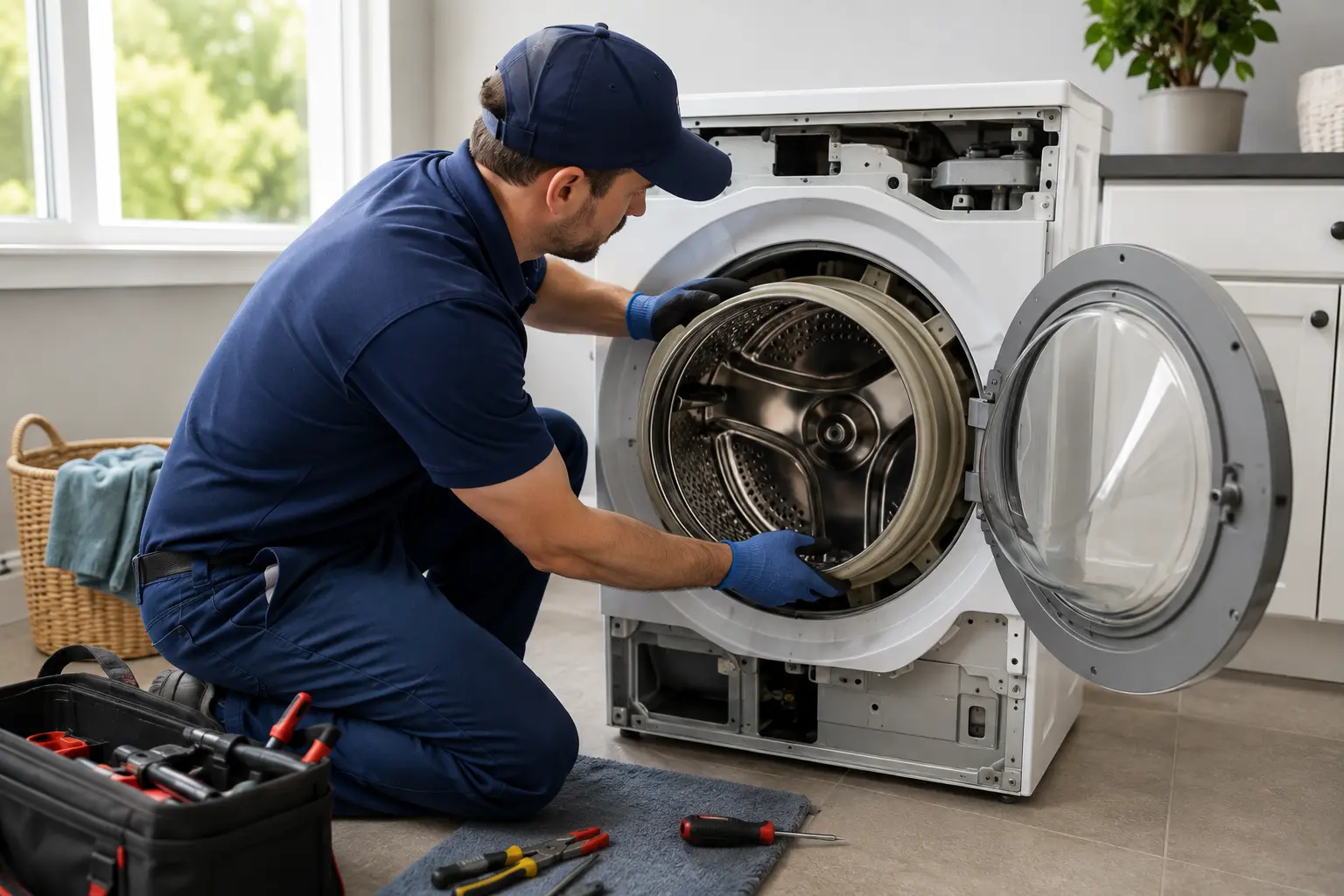
Why won’t my washer spin?
Usually a worn drive belt, a failing lid switch or door lock that thinks the door is open, or a motor coupler that has sheared. An unbalanced load can also trip a safety sensor that stops the spin cycle before it starts.
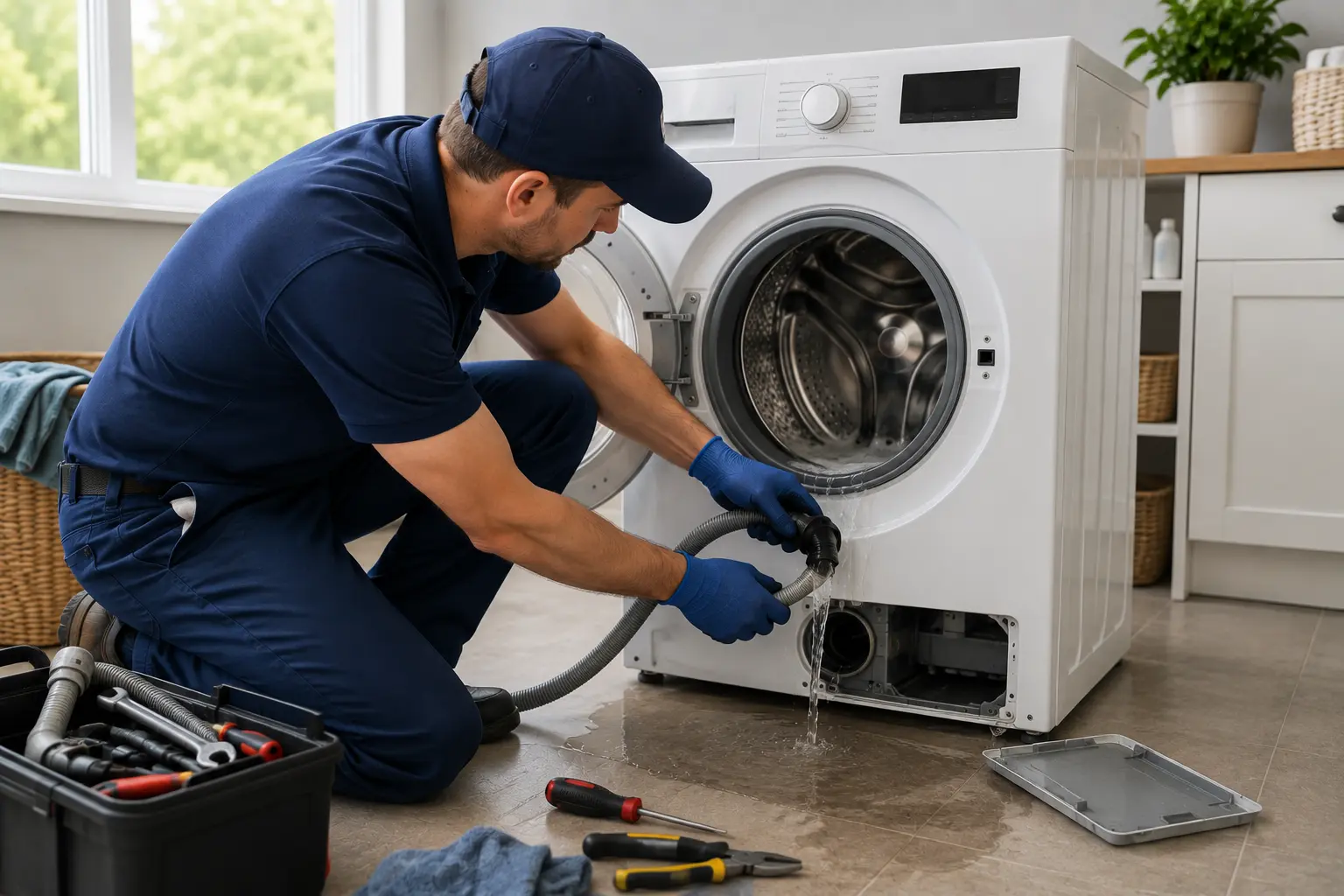
Why won’t my washer drain?
Most often a clogged drain pump filter, a kinked or blocked drain hose, or a failing drain pump itself. Small items like coins and socks are a common culprit for a blocked filter.
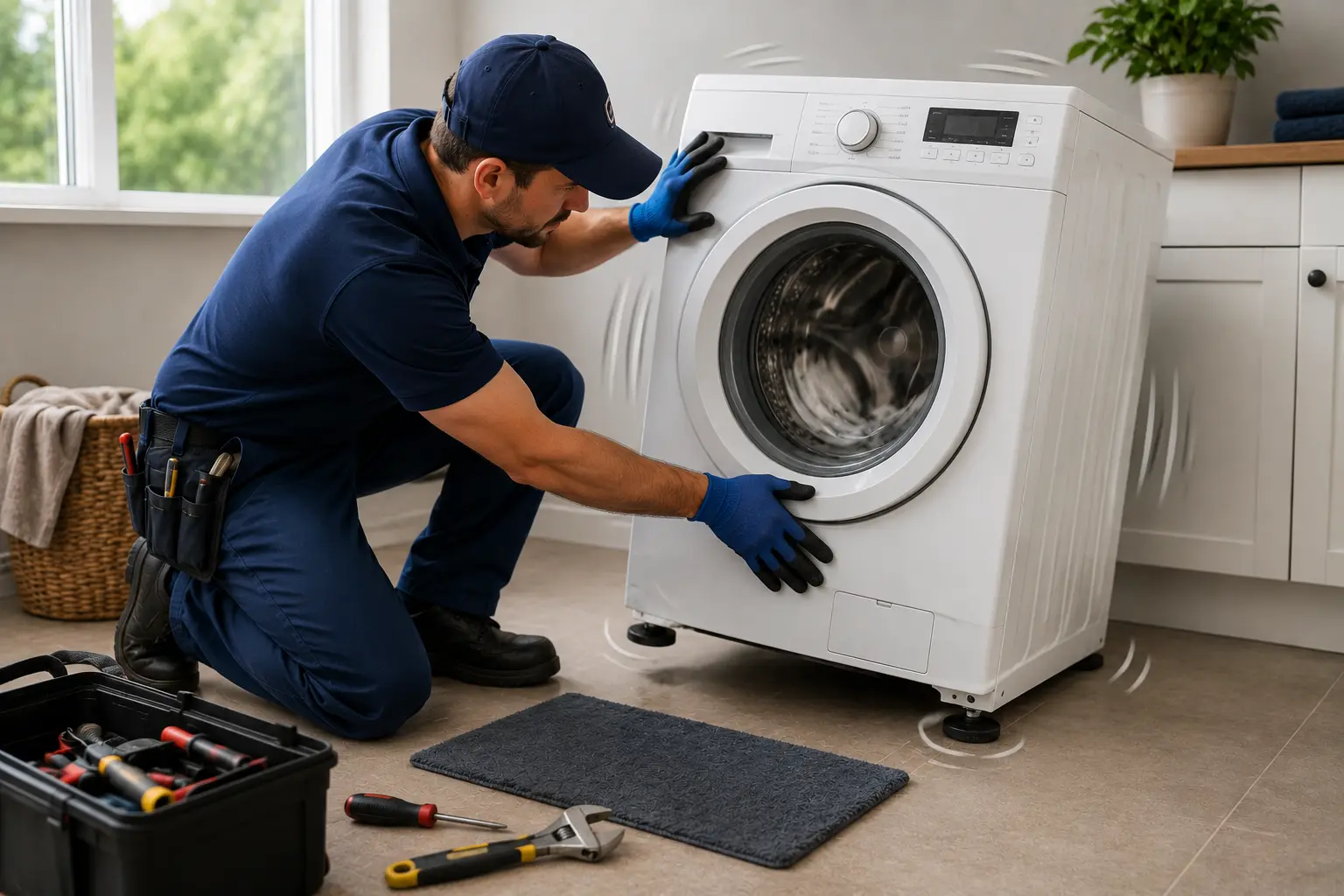
Why does my washer shake or walk during the spin cycle?
Usually unlevel feet, worn suspension springs or shocks, or a failing tub bearing. On older machines a bad bearing tends to get louder and worse with every load rather than improving on its own.
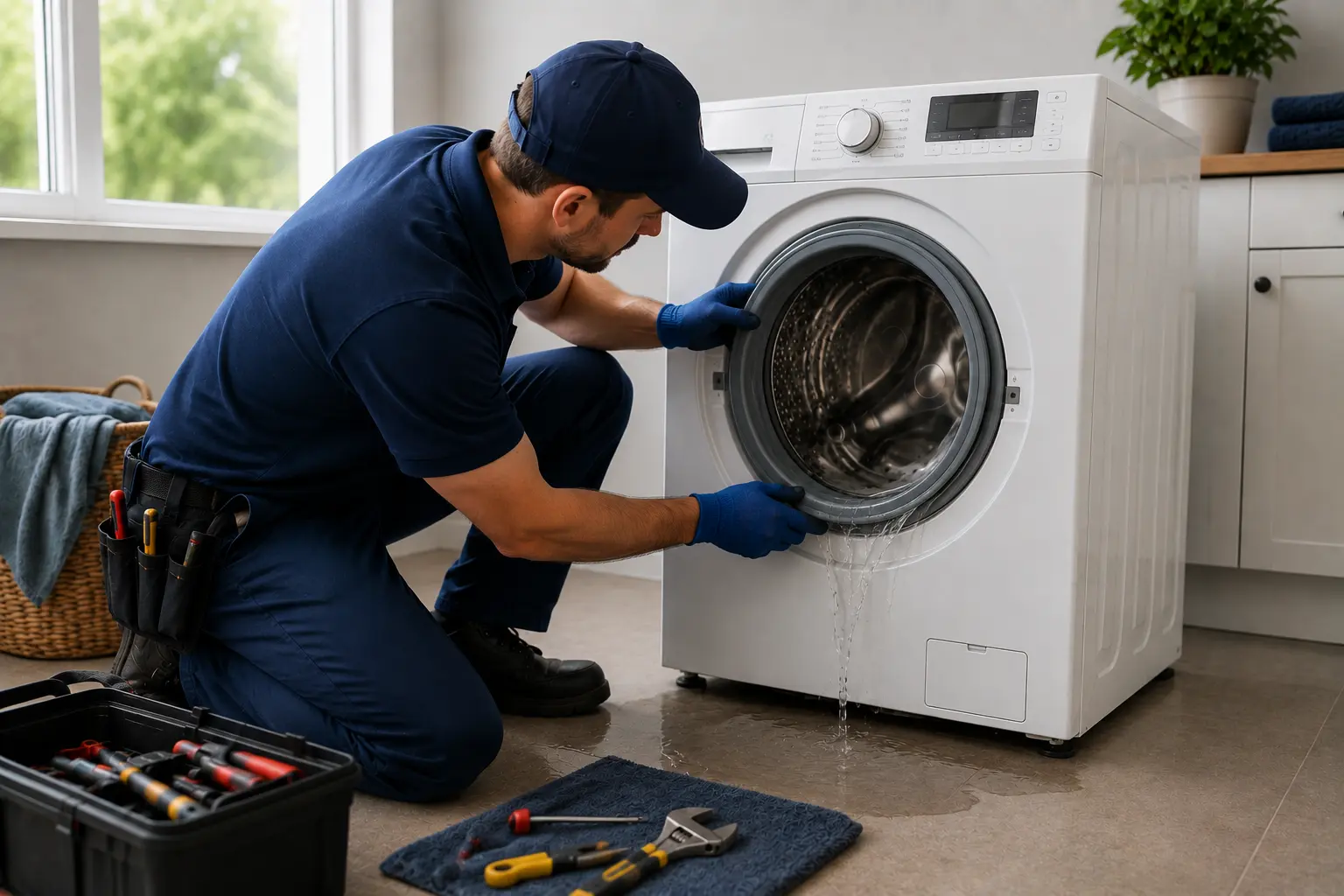
Why is my washer leaking from the door or seal?
A cracked or torn door gasket is the most common cause on front loaders, sometimes from a coin or zipper catching the rubber. It can also point to a clogged drain hose backing water up during the cycle.
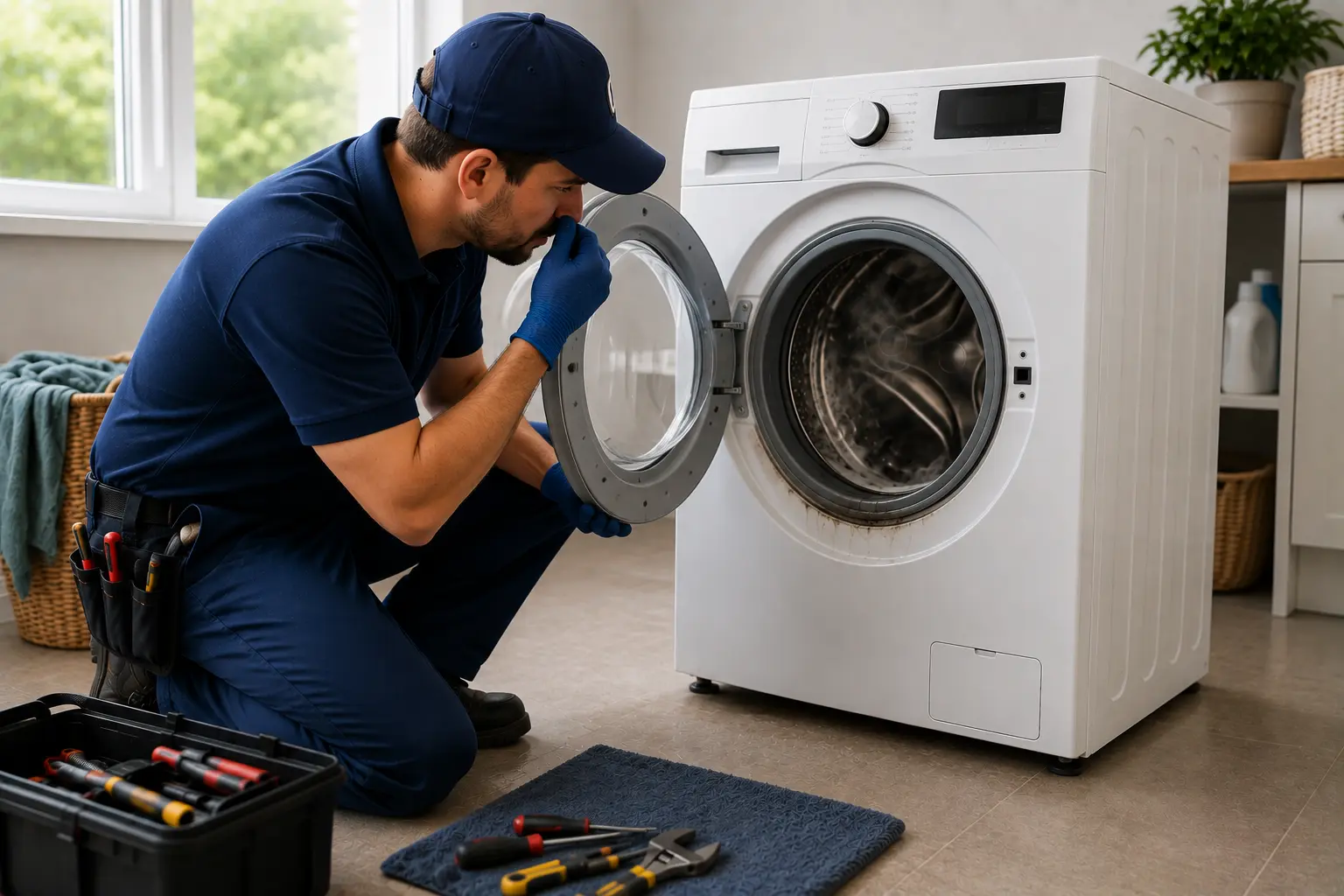
Why does my washer smell musty or moldy?
Almost always trapped moisture in the door seal or detergent drawer on front load machines. Leaving the door open between loads and running a monthly cleaning cycle usually prevents it, but a persistent smell after cleaning can mean mold has reached the drain system.
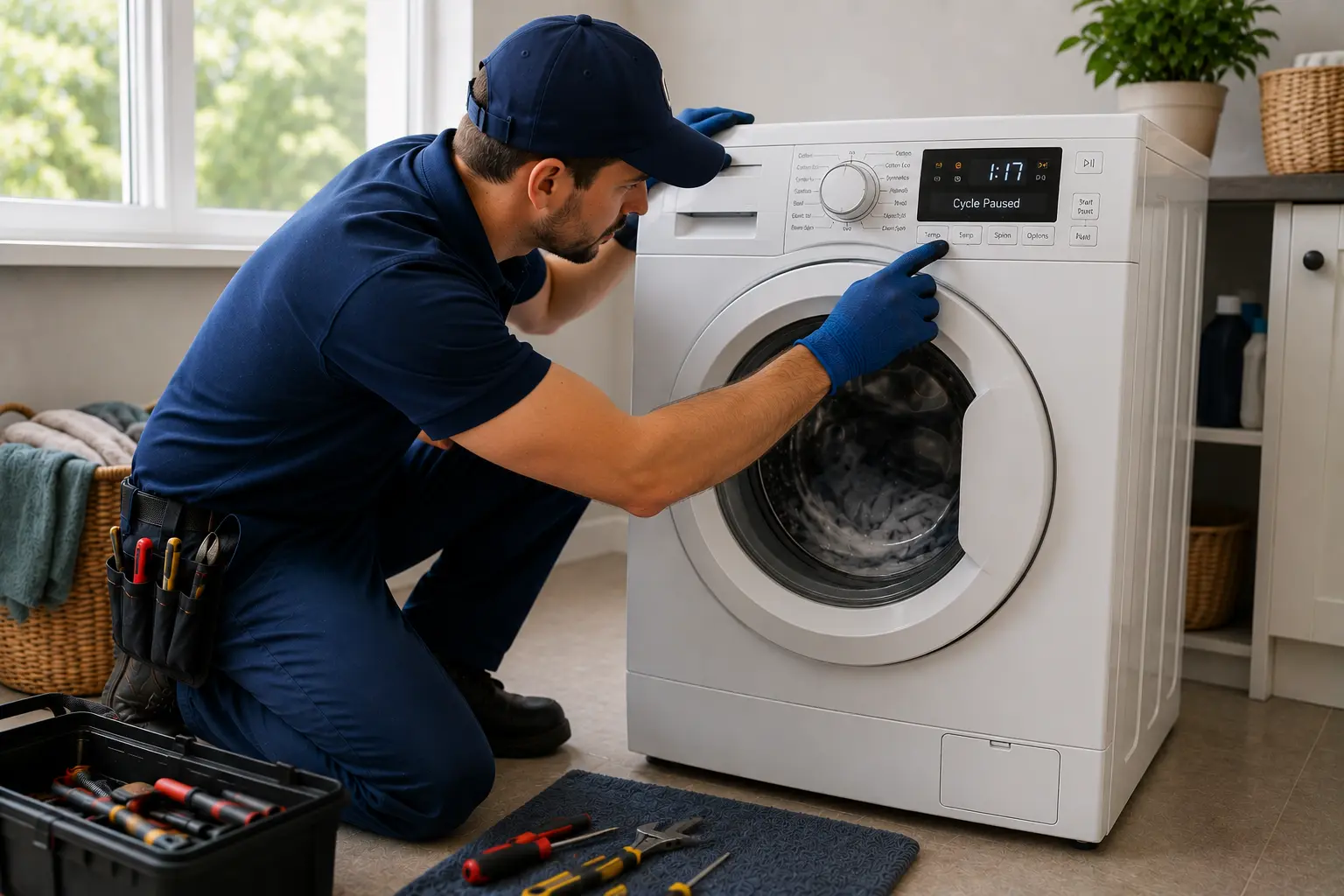
Why does my washer stop mid cycle?
Often a lid switch or door lock issue, an overheating motor, or a control board losing communication with the rest of the machine. Power fluctuations can also cause a machine to pause and refuse to resume.
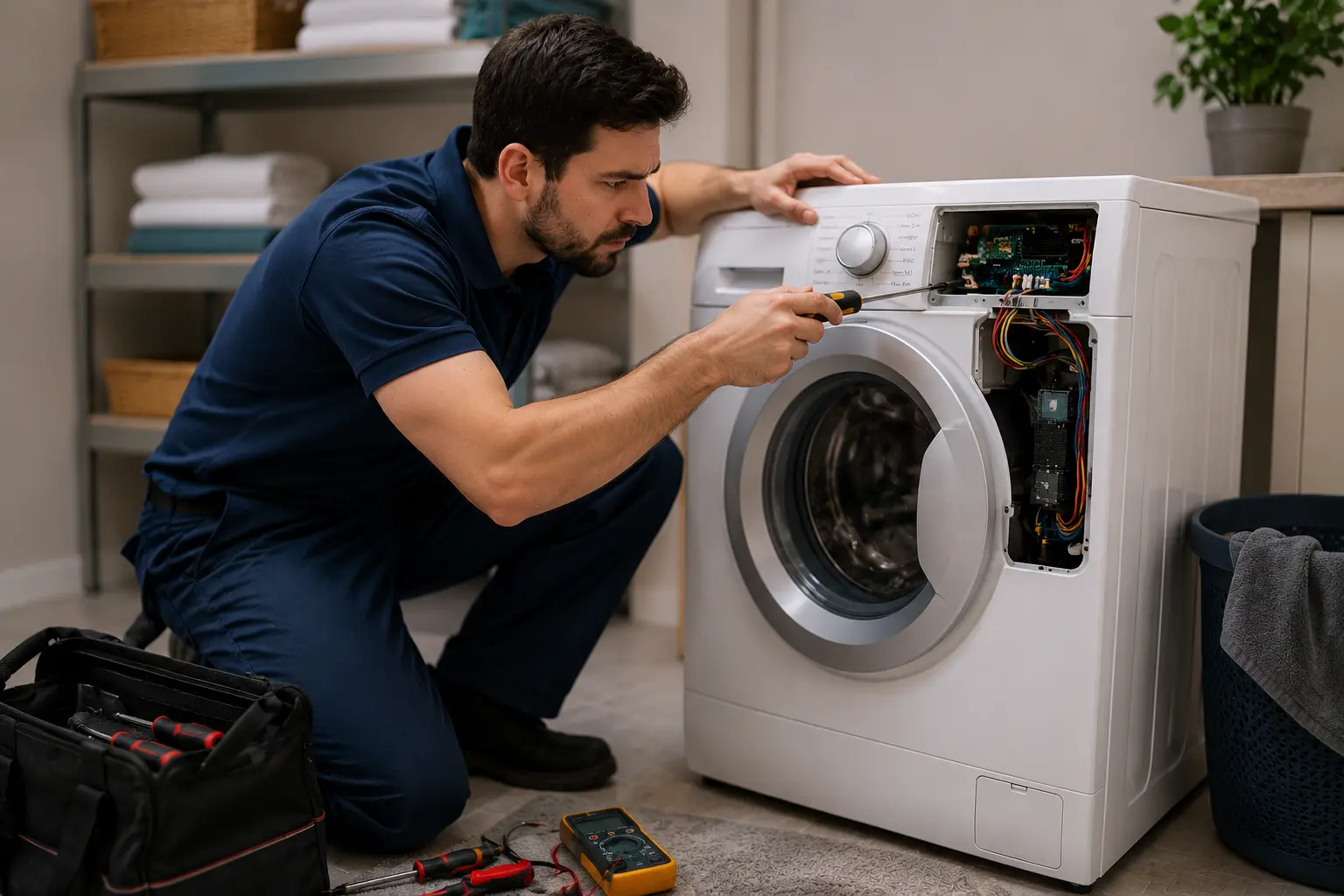
Why is my washer showing an error code and not starting?
Error codes point to a specific sensor or component, a bad water level sensor, a drain issue, or a locked door sensor are common ones. The exact code tells us where to look before we even open the cabinet.
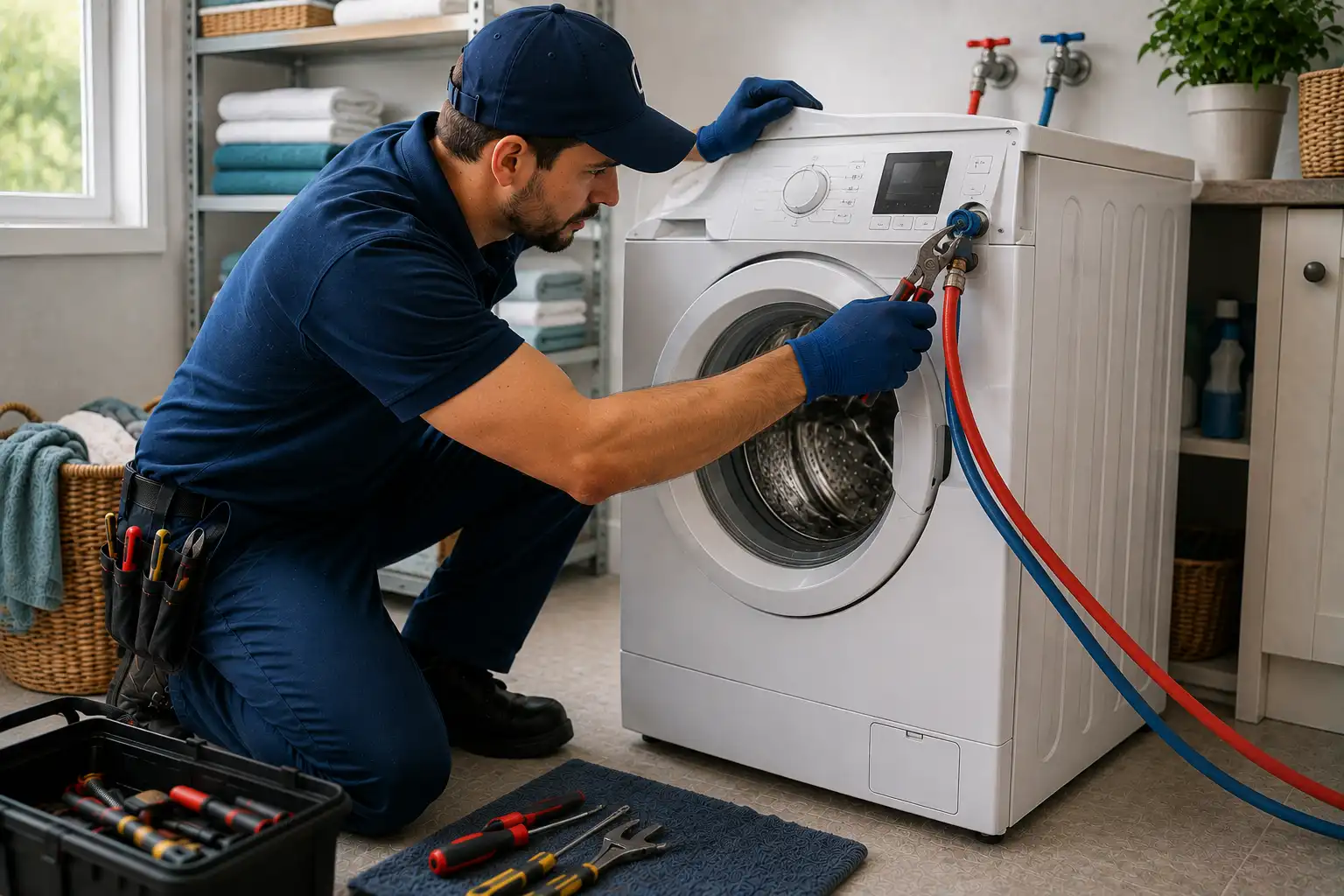
Why does my washer fill slowly or not fill at all?
Usually a clogged inlet screen from mineral buildup in the water lines, a failing water inlet valve, or a kinked supply hose. This is one of the more common calls we get given how hard the water runs here.
Warning Signs Your Washer Needs Attention
Catching these early usually means a smaller repair. Waiting on them usually doesn’t.
Loud grinding or banging during the spin cycle
Water pooling around the base after a cycle
Clothes coming out still soaked instead of spun dry
A burning smell during or after a cycle
The machine shaking hard enough to move away from the wall
A musty smell that comes back even after cleaning
Cycles taking noticeably longer than they used to
Error codes appearing more often, even if the machine still runs
None of these mean the washer is done for. Most point to a single part, a belt, a pump, a seal, that’s simple to replace if it’s caught before it takes something else down with it. If you’re seeing more than one of these at once, that’s usually the machine telling you it’s time for a look before it stops altogether.
Front Load vs Top Load Washer Issues
The two styles fail in different ways. Here’s what’s specific to each.
The door seal is the biggest point of failure, it traps moisture and is prone to mold if the door isn’t left open between loads. Front loaders also rely on a drain pump filter that needs to be cleaned periodically, and a failing one is one of the most common reasons we get called out. Bearings can fail over time from the constant high speed spin, which shows up as a loud grinding or rumbling noise that gets worse.
Agitator and transmission issues are more common here, especially on older models with a belt driven design. Lid switches wear out and can stop a machine from spinning even though everything else works fine. Top loaders use more water per cycle, so a failing water inlet valve or a fill hose clogged with mineral buildup shows up faster than it would on a front loader.
Which one is more reliable? There isn’t a clear winner, front loaders tend to be more water and energy efficient but come with more seal and pump maintenance, while top loaders are often simpler and cheaper to repair but use more water per load. Age and how well a machine has been maintained matters more than the style itself.
Is Your Washer Beyond Repair?
Age matters, but the type of failure matters more. Here’s the real line between repair and replace.
- Drive belt or drain pump replacement
- Door seal or gasket replacement
- Lid switch or door lock failure
- Control board or water inlet valve issues
- Suspension springs or shocks on a machine under 8 years old
- Tub bearing failure on a machine over 8 to 10 years old
- Motor and transmission failing together
- Cracked outer tub or cabinet frame
- Second major repair within a year on an older unit
- Repair quote approaching 50% of a replacement unit’s cost
Why the Failure Type Matters
A belt, a pump, a switch, these are individual parts doing their job, and replacing one doesn’t say anything about the rest of the machine. A bearing or a transmission failure is different, it usually means the core of the machine has been under stress for years and other components aren’t far behind. We’ll always tell you honestly which category your repair falls into before recommending anything.
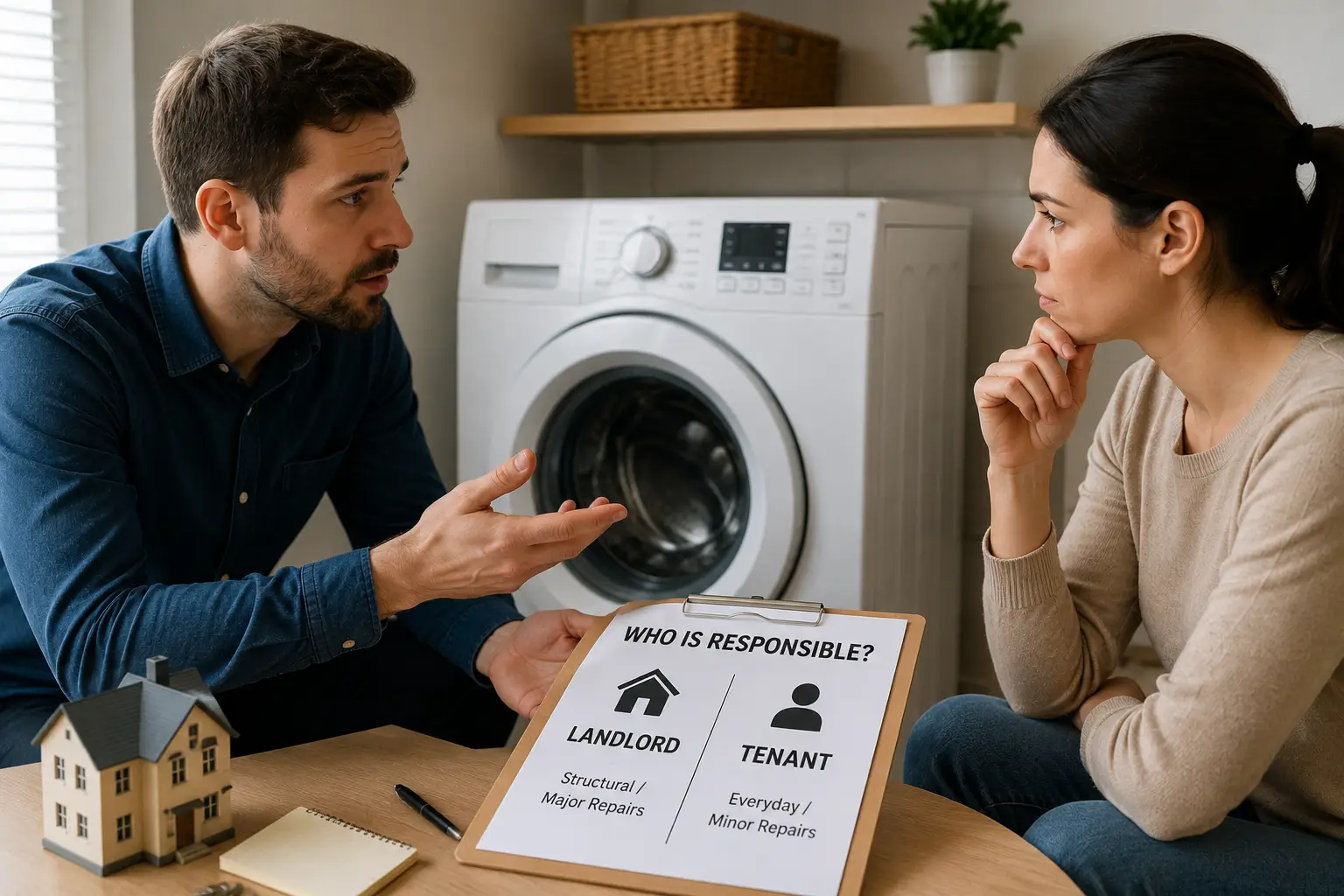
Who Is Responsible, Landlord or Tenant?
This comes up constantly, and Florida law is fairly clear on the basics. If a washer was provided as part of the rental, the landlord is generally responsible for keeping it in working order. Some leases try to shift small repairs, often anything under 100 dollars, onto the tenant, but that language doesn’t erase the landlord’s baseline obligation to provide a working appliance under Florida law.
- Provided appliances are the landlord’s responsibility to maintain
- Lease clauses shifting small repairs to tenants are common but limited
- A written diagnosis protects both sides if there’s a dispute
- We document every repair with the actual cause, not just the fix
If you’re a tenant and your landlord is pushing back on a repair, or a landlord trying to sort out who’s on the hook for a bill, a clear written diagnosis from a licensed technician is usually the fastest way to settle it. We provide one on every call, no extra charge.
Brand Specific Washer Notes
Every brand has its own quirks. Here’s what we see most often by manufacturer.
Samsung
Samsung machines lean heavily on electronic controls, so problems that would just be a mechanical fix on a simpler washer can show up as a code instead. Parts availability has improved in recent years, and most repairs are straightforward once the exact fault is identified.
LG
LG front loaders are generally well built, and the hall sensor or motor position sensor is the part we see fail most often on certain models. Noting the exact error code before you call saves a step, since it usually points us straight to the part before we even arrive.
Whirlpool
Whirlpool top loaders are some of the simplest machines to work on, which keeps repair costs lower on average. Main control board issues on certain models are a known pattern worth checking first if the machine won’t power on or respond.
GE
GE uses more proprietary parts on several models compared to brands that share more universal components across their lineup. It’s not a markup on our end, it reflects what the part actually costs us to source, and we always separate part cost from labor on the invoice.
Bosch
Bosch washers tend to run higher on parts cost given their design, but the build quality is generally strong and repairs are often worth doing rather than replacing, especially on machines under 8 years old.
Maytag & Kenmore
Older Maytag and Kenmore machines were built to last and parts are still widely available, which makes repair the clear choice in most cases even on a 10 to 15 year old unit, provided the failure is a single component rather than a core mechanical issue.
DIY Repairs, What’s Actually Worth Doing Yourself
Some washer repairs are genuinely simple. Others turn into a bigger bill if attempted without the right experience.
- Door seal or gasket replacement on most models
- Cleaning the drain pump filter
- Replacing a fill hose or inlet screen
- Leveling the machine using the adjustable feet
- Drain pump or drive belt replacement
- Suspension springs, shocks, or tub bearing repair
- Control board or wiring harness issues
- Motor or transmission replacement
Why the difference matters
A door seal or a drain filter is contained and low risk, if something goes wrong you haven’t damaged anything else. A drive belt or a suspension repair usually means removing panels and getting into the machine’s core mechanics, and a mistake there, a cabinet put back together wrong or a part installed under tension incorrectly, can damage a component that was otherwise fine. If you’re not sure which category your repair falls into, send us a photo and we’ll tell you honestly whether it’s worth doing yourself.
Washer Repair Costs in Sarasota
Real ranges, not a vague estimate. Exact pricing is confirmed on site before any work begins.
| Repair Type | Typical Cost Range |
|---|---|
| Diagnostic / Service Call | $99 – $150 (waived if you approve the repair) |
| Door Seal / Gasket Replacement | $150 – $350 |
| Drain Pump Replacement | $150 – $300 |
| Drive Belt Replacement | $100 – $200 |
| Lid Switch / Door Lock Replacement | $100 – $200 |
| Water Inlet Valve Replacement | $150 – $250 |
| Control Board Replacement | $250 – $500 |
| Suspension / Shock Replacement | $150 – $350 |
| Motor Replacement | $300 – $600 |
| Tub Bearing / Transmission Repair | $400 and up (often not worth it on older units) |
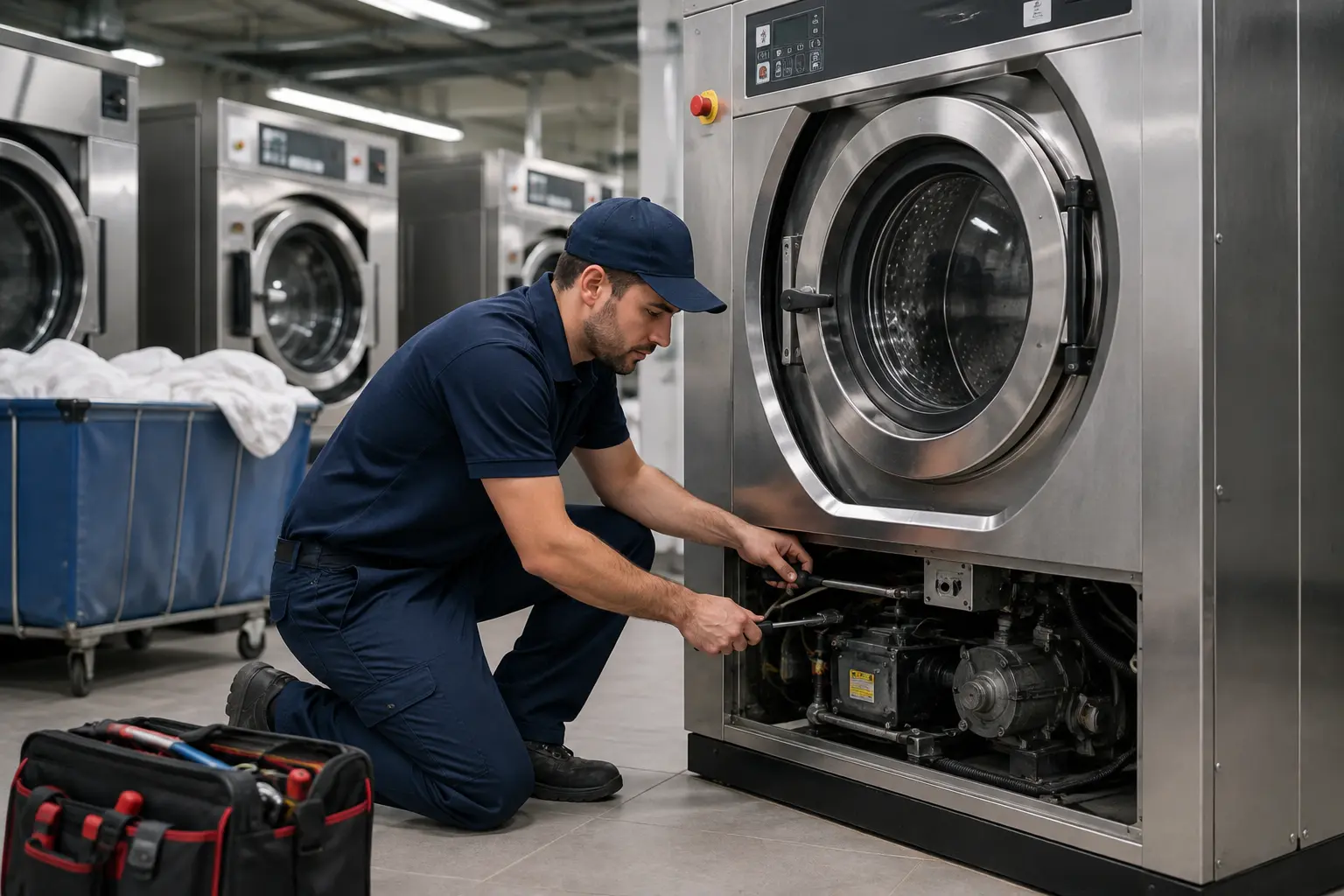
Commercial & Multi Unit Laundry Repair
A washer down in an apartment complex laundry room or a commercial laundromat means lost income and frustrated residents or customers every hour it sits broken. We work with property managers, laundromats, and small businesses across Sarasota to get commercial units back online quickly, and diagnosed correctly the first time.
- Apartment and condo laundry room machines
- Laundromat and coin operated units
- Property management maintenance contracts
- Repeated issues other companies couldn’t resolve
If a unit has been “fixed” more than once and the same problem keeps coming back, that usually means the actual root cause was never diagnosed, just a symptom. We check the full system before calling a repair done, which saves you from paying for the same visit twice.
Washer Repair Questions, Answered
Specific questions about washer repair in Sarasota. For general questions about our service, check our main FAQ page.
How much does it cost to have someone look at a washer?
What’s a reasonable rate for a washer repair technician to come out?
Why is my washer parts cost higher on certain brands like GE or Bosch?
Does a home warranty cover washer repair?
Is it worth fixing an older washer with a transmission or seal issue?
How long should a washer last before I consider replacing it instead of repairing it?
Can I replace my own washer door seal?
Is a landlord or tenant responsible for washer repairs in Florida?
How long does a typical washer repair take?
Can washer repairs be done same day?
Why does my washer stop working and show an error code?
Are Samsung washers less reliable than other brands?
Why won’t my washer turn on at all?
Is it normal for my washer to make noise, and what noises should worry me?
What causes a burning smell from my washer, and is it safe to keep using it?
Should I keep using my washer if it’s leaking?
My washer is shaking violently during the spin cycle. Is that dangerous?
How often should I clean my washer to prevent problems?
Why does my washer smell even after I clean it?
Do you repair stackable and apartment size washers?
Get Your Washer Fixed Today
Tell us what it’s doing and we’ll get a technician out fast. No obligation, no pressure, just a straight answer and a fair price.
Fill out the form. One of our reps will reach out to get your inspection scheduled.