Sub-Zero Repair in Sarasota, FL
Service light flashing, not cooling, or showing an error code? We specialize in Sub-Zero refrigerators, freezers, and wine coolers, and give you a straight answer before we touch anything.
100+ ReviewS
Licensed & Certified
100% Satisfied clients
Same Day Appointments
All Major Brands Serviced
Upfront Pricing, No Hidden Fees
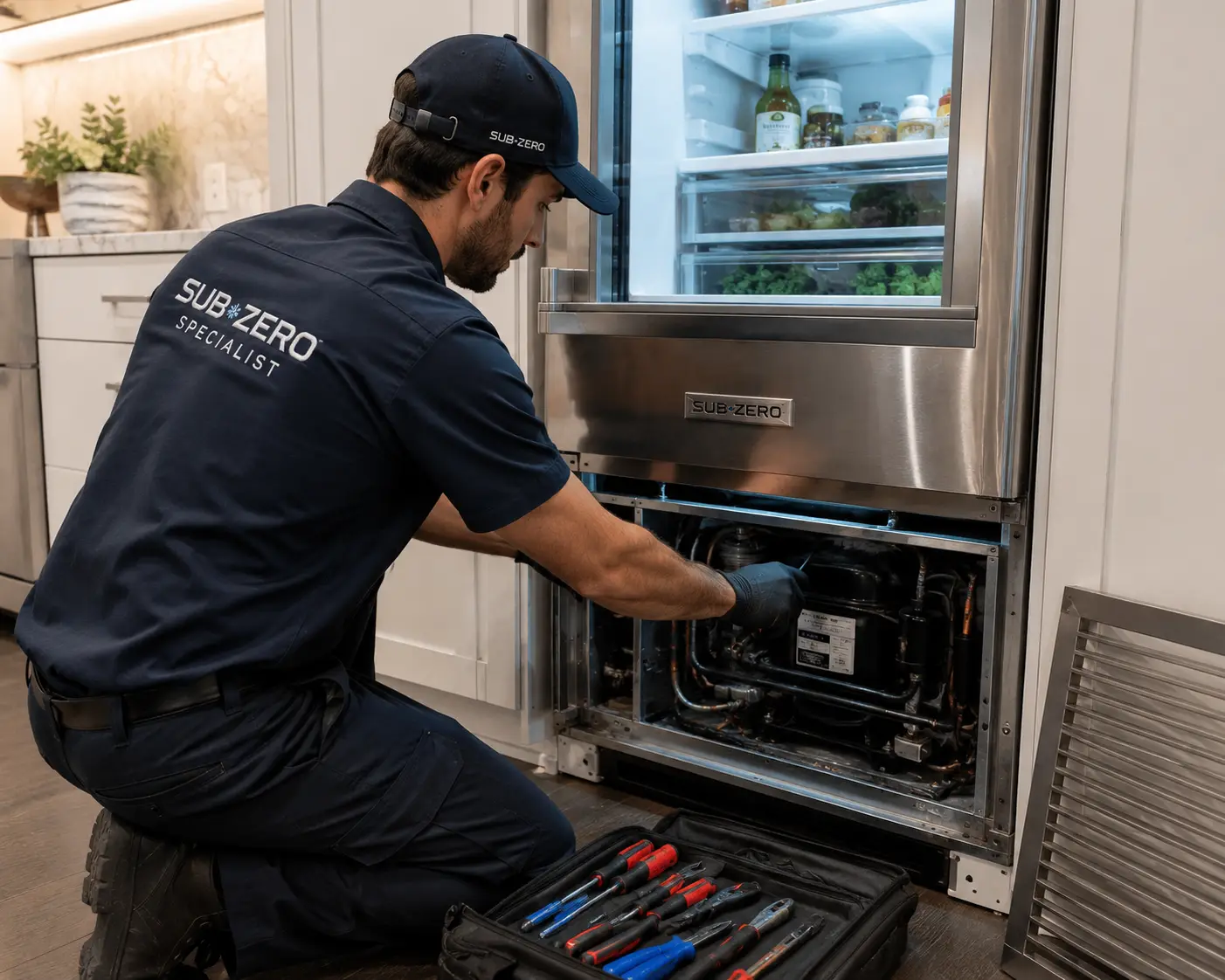
Sub-Zero Repair Done by True Specialists
A Sub-Zero is built to run for 20 years or more, and that’s exactly why most of the calls we get aren’t about a dying unit, they’re about one isolated part that’s worn out on an otherwise healthy machine. A worn door gasket, a failing thermistor, a fan that’s seized up, none of that means the sealed system is in trouble, it just means one component has reached the end of its life while the rest of the unit still has years left in it.
That distinction matters because Sub-Zero repairs get treated very differently depending on who you call. A generalist tech unfamiliar with the platform can misread a simple sensor fault as a bigger problem, or worse, miss it entirely. We work on Sub-Zero sealed systems specifically, which means we can usually tell within minutes whether you’re looking at a quick fix or something that genuinely warrants a bigger conversation.
Our approach is the same every time, diagnose first, explain what we found in plain language, then quote the actual repair before any work begins.
Sub-Zero Models We Repair
Sub-Zero makes several distinct product lines, and each has its own quirks. Here’s what we service.
Built-In Refrigerators
Full size built-in and integrated models, including panel-ready units with custom cabinetry fronts.
Standalone Refrigerators & Freezers
Freestanding full-size units for kitchens without built-in cabinetry cutouts.
Under-Counter Units
Refrigerator drawers, freezer drawers, and compact under-counter models common in islands and wet bars.
Wine Coolers & Beverage Centers
Dual zone wine storage and beverage refrigeration units, including temperature and humidity control issues specific to these units.
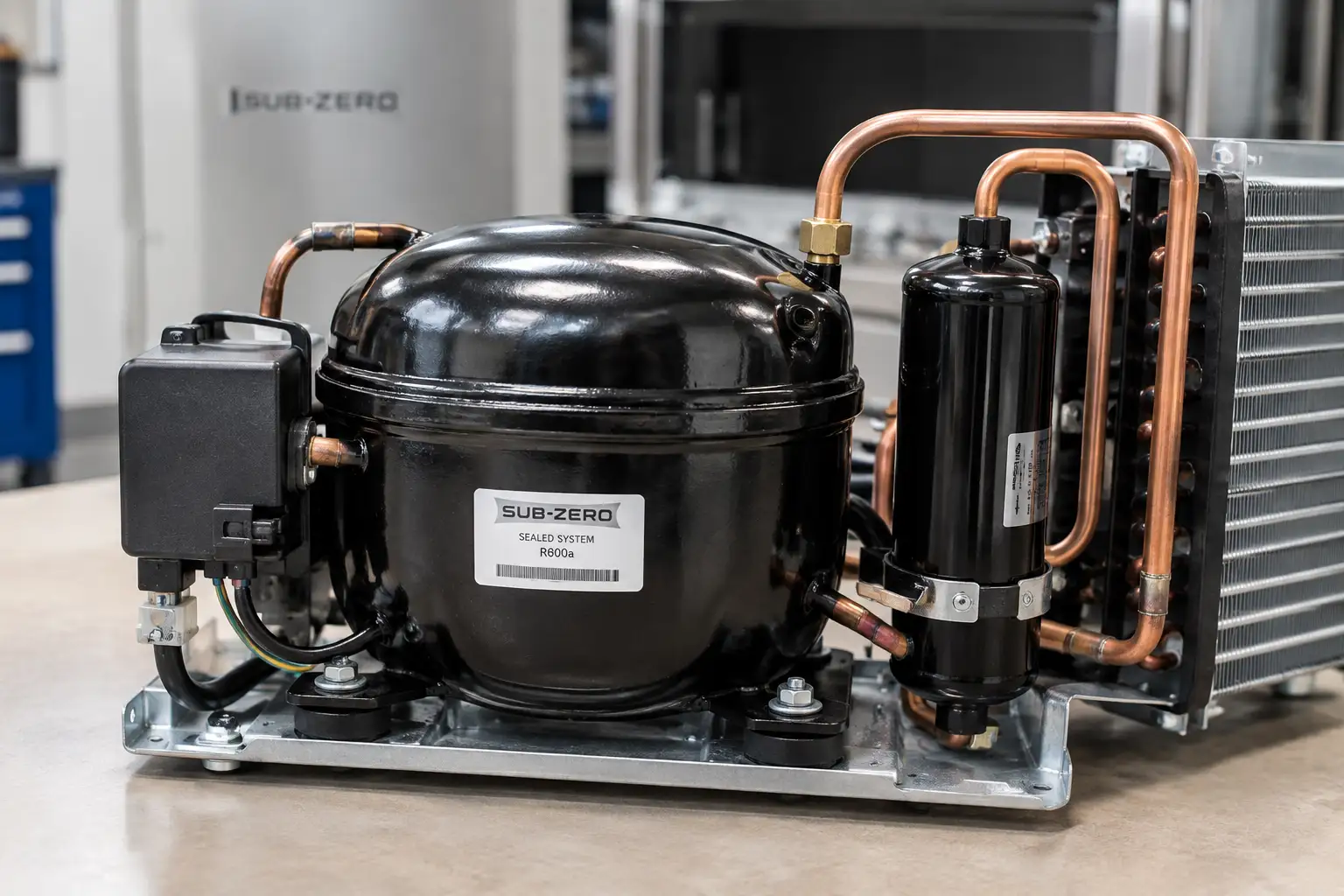
Sealed System Components
Compressors, condensers, evaporators, and the full sealed refrigeration circuit across every Sub-Zero model line.
Electronic Controls & Sensors
Control boards, thermistors, door sensors, and the diagnostic systems Sub-Zero uses to flag faults.
Common Sub-Zero Problems & Error Codes
Sub-Zero units display specific fault codes when something goes wrong, rather than just stopping without explanation. Here’s what the most common ones actually mean.
What it means
This code points to a refrigerator compartment temperature fault, the system has detected that the fresh food side is running warmer than it should for an extended period.
Common cause
Usually a door seal that’s no longer sealing tight, a condenser coil coated in dust and pet hair restricting airflow, or in some cases a failing evaporator fan not circulating air properly through the compartment.
What it means
Similar to EC 50 but on the freezer side, the system has flagged the freezer compartment as running warmer than its target temperature.
Common cause
Often the same root causes as EC 50, a door seal issue or restricted airflow, but on the freezer side this can also point to a defrost cycle that isn’t completing properly, leaving ice buildup that blocks the evaporator.
What it means
A defrost sensor fault, the control board isn’t getting a reliable reading from the sensor responsible for managing the automatic defrost cycle.
Common cause
Usually the defrost thermistor itself has failed or its wiring connection has come loose, which is a straightforward and inexpensive part to replace once confirmed.
What it means
These codes relate to fan operation, either the condenser fan or the evaporator fan is running outside its expected parameters or has stopped responding entirely.
Common cause
A fan motor nearing the end of its life, or debris and ice buildup physically blocking the fan blade from turning freely. This is one of the more common repairs we see on units in the 8 to 12 year range.
What it means
A communication fault between the unit’s control boards, the different modules inside the unit aren’t talking to each other correctly.
Common cause
Often a loose or corroded wiring connection rather than an outright board failure, which is why this code is worth having properly diagnosed rather than assuming the worst right away.
What it means
The general service indicator. Sub-Zero units display this wrench symbol whenever the system has logged a fault that needs professional attention, without always specifying the exact cause on the display itself.
Common cause
Could point to any of the faults above, or something else the diagnostic system has flagged. This is where pulling the full error history during a service visit matters, since the wrench alone doesn’t tell the full story.
A code is a starting point, not a diagnosis. Every one of these codes narrows down where to look, but confirming the actual cause still means testing the specific component. We read the full fault history on every service call rather than reacting to a single flashing code, since Sub-Zero units often log more than one fault before the display shows just one.
Sub-Zero Repair Pricing in Sarasota
Sub-Zero units use higher grade components than standard refrigerators, and pricing reflects that. Real ranges below, exact pricing confirmed on site before any work begins.
| Repair Type | Typical Cost Range |
|---|---|
| Diagnostic / Service Call | $129 – $199 (waived if you approve the repair) |
| Door Gasket Replacement | $200 – $400 |
| Thermistor / Sensor Replacement | $200 – $350 |
| Evaporator or Condenser Fan Motor | $300 – $550 |
| Control Board Replacement | $450 – $900 |
| Defrost System Repair | $300 – $600 |
| Sealed System / Refrigerant Repair | $800 and up |
| Compressor Replacement | $1,200 – $2,500 (parts and labor) |
Is Your Sub-Zero Worth Repairing?
A Sub-Zero is built for a 20 year lifespan, which changes this math compared to a standard refrigerator. Here’s how we actually think about it.
- Door gasket or seal replacement
- Thermistor or sensor failure
- Fan motor replacement
- Control board issues on a unit under 15 years old
- First sealed system repair on any unit
- Compressor failure on a unit approaching 20 years old
- A second sealed system leak on the same unit
- Multiple major components failing within the same year
- Repair quote approaching the cost of a comparable new unit
Why Sub-Zero Math Is Different
Most refrigerators are built with a 10 to 12 year expected lifespan, so a major repair on a 10 year old standard fridge is a real question mark. Sub-Zero units are built to run for 20 years or more, which means a control board or fan motor failure at year 10 or 12 isn’t the unit reaching the end of its life, it’s a single part reaching the end of its own. We’ll always tell you honestly where your unit sits in that lifespan before recommending a repair, and we’ll say plainly if a unit is genuinely at the point where replacement makes more sense.
Sub-Zero Repair Questions, Answered
Specific questions about Sub-Zero repair in Sarasota. For general questions about our service, check our main FAQ page.
Why is my Sub-Zero showing a flashing service light?
What does it mean when my Sub-Zero goes into diagnostic mode?
Is it worth fixing an older Sub-Zero unit?
Does my Sub-Zero warranty cover this repair?
Why does my Sub-Zero seem fine but still shows an error code?
How long does a typical Sub-Zero repair take?
Can a Sub-Zero repair be done without special parts?
Should I be worried if my Sub-Zero has multiple error codes at once?
How much does Sub-Zero repair typically cost?
Why is my Sub-Zero making a clicking, buzzing, or humming noise?
Is it safe to repair a Sub-Zero myself?
How often should a Sub-Zero be serviced?
Why isn’t my Sub-Zero’s water or ice dispenser working?
Can Sub-Zero repairs be done same day?
Why is my Sub-Zero leaking water onto the floor?
Get Your Sub-Zero Fixed Today
Tell us what it’s doing and we’ll get a technician out fast. No obligation, no pressure, just a straight answer and a fair price.
Fill out the form. One of our reps will reach out to get your inspection scheduled.