
KitchenAid Repair in Sarasota, FL
An F-code on the range, a dishwasher that won’t dry, or a fridge running warm? We specialize in KitchenAid dishwashers, ranges, wall ovens, cooktops, refrigerators, and microwaves, and give you a straight answer before we touch anything.
100+ ReviewS
Licensed & Certified
100% Satisfied clients
Same Day Appointments
All Major Brands Serviced
Upfront Pricing, No Hidden Fees
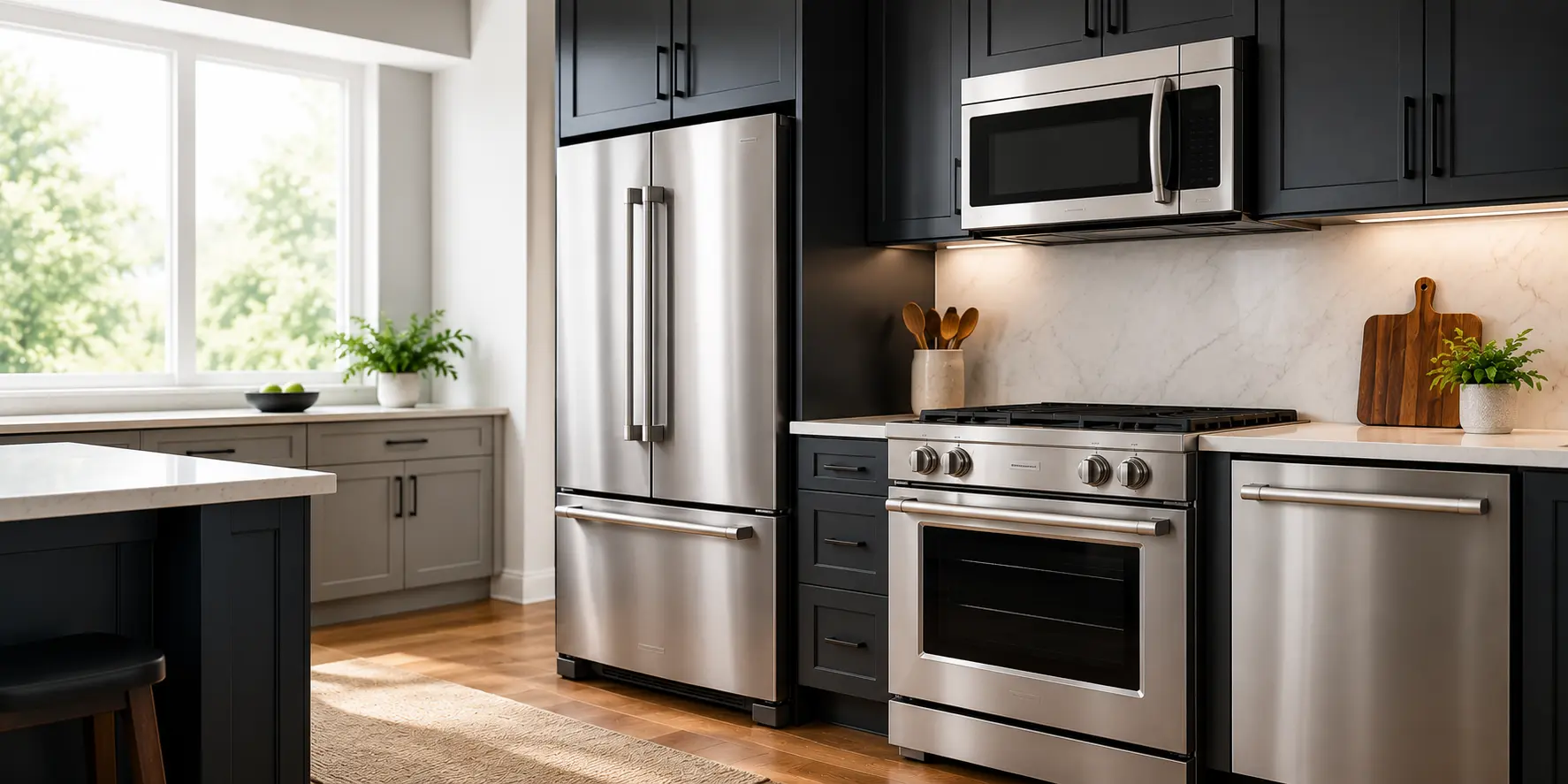
KitchenAid Repair Backed by Real Experience
KitchenAid built its name on the stand mixer, but the appliances back that reputation with genuinely useful diagnostics, from ProWash soil sensors to AquaLift’s water-based clean cycle. Most of the calls we get aren’t a unit on its way out, they’re one part doing the talking: a thermistor, a door latch, a fan motor, showing up as a flashing code while the rest of the appliance runs exactly as it should.
KitchenAid is manufactured by Whirlpool Corporation, and that shared engineering matters more than people expect. Core components, control boards, pumps, compressors, heating elements, are often built on the same platform across Whirlpool, KitchenAid, and Maytag, even when the styling and price point differ. A generalist technician unfamiliar with that overlap can order the wrong part or misread a code meant for a different control logic. We work on KitchenAid appliances specifically, so we usually know within minutes whether a fault is something you can check yourself or something that genuinely needs a part replaced.
What We Repair in Your KitchenAid
KitchenAid’s large appliance lineup lives mostly in the kitchen. Here’s what we service.

Dishwashers
PrintShield finish built-in models with ProWash and ProDry systems, including third rack and 360° Max Jets designs.

Ranges & Ovens
Gas, electric, and dual fuel freestanding and slide-in ranges with Even-Heat True Convection and AquaLift self-cleaning.

Wall Ovens
Single and double built-in wall ovens, including combination and speed oven units common in KitchenAid kitchen suites.

Cooktops
Gas, electric, and induction built-in cooktops, including continuous grate and downdraft models.

Refrigerators & Freezers
French door, side-by-side, and Built-In KBFN column refrigeration, including sealed system and defrost failures.
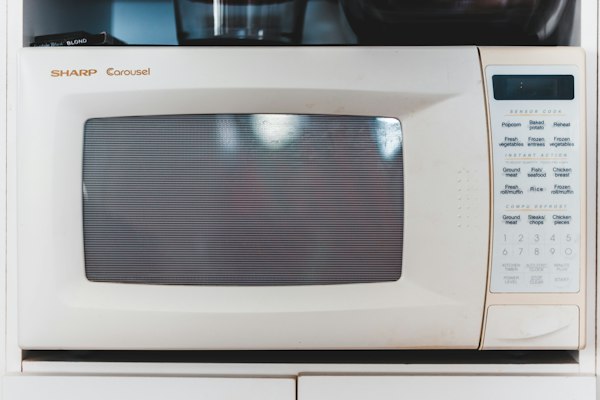
Microwaves & Combination Ovens
Built-in and over-the-range microwave and speed oven combination units in current KitchenAid kitchen packages.
Common KitchenAid Problems & Error Codes
KitchenAid appliances flag most faults with a flashing light pattern or an F-series code. Here’s what the most common ones actually mean.
Dishwasher Error Codes
What it means: A control board memory failure, the wash program halts partway through and the door unlocks on its own.
Common cause: An internal fault on the electronic control board. Cutting power for a full minute sometimes clears a temporary glitch, but a repeat failure means the board needs replacing.
What it means: A thermistor fault, the control board can’t confirm water temperature, so heated dry and sanitize steps may not run.
Common cause: A failed thermistor sensor. Dishes usually still get washed but come out damp or under-dried until the sensor is replaced.
What it means: A wash pump or motor fault, the dishwasher won’t circulate water properly during the cycle.
Common cause: A blocked or failed wash pump. Worth checking for debris in the pump area before assuming a full replacement is needed.
What it means: The optical water indicator (OWI), the sensor that reads soil level and water clarity for the ProWash cycle, failed to calibrate.
Common cause: A dirty or failed OWI sensor. Cleaning the sensor and resetting the dishwasher resolves a good share of these before a part is ever needed.
What it means: A heating element failure, so the heated wash and heated dry functions won’t run.
Common cause: The heating element itself has failed and needs professional replacement.
What it means: Older KitchenAid HE dishwashers without a text display communicate faults by flashing the light next to the “Clean” label in counted patterns instead of showing a code.
Common cause: Count the flashes, a pause, then more flashes, this is a function code followed by a fault code (for example, 6 flashes then 1 flash means an inlet water fault). Noting the exact pattern before calling saves diagnostic time.
Range & Oven Error Codes
What it means: A control board failure on the electronic range control.
Common cause: An internal fault on the board itself. Power the unit down at the breaker for one minute, then back up, if the code returns, the control board needs replacing.
What it means: The oven is registering as running too hot.
Common cause: Welded contacts on the bake or broil relay, or a failing temperature sensor circuit. On self-clean models, a stuck door lock can also trigger this code.
What it means: An open oven temperature sensor (RTD) circuit.
Common cause: The temperature sensor itself has failed and needs replacing, a straightforward part swap once confirmed.
What it means: A meat probe defect, on models with a temperature probe feature.
Common cause: A pinched probe wire or moisture in the receptacle. If the probe and receptacle both check out clean, the probe itself needs replacing.
What it means: A door latch or door switch fault, most often seen on self-clean models where the switches don’t agree on whether the door is latched.
Common cause: A misaligned or failing door switch. Never force a locked self-clean door, the latch assembly can be reset safely by a technician.
Refrigerator Error Codes
What it means: A freezer fan fault, the evaporator fan isn’t circulating cold air properly.
Common cause: A failed evaporator fan motor. Replacement requires accessing the rear evaporator compartment and is a professional repair on every KitchenAid refrigerator model.
What it means: A condenser fan fault, limiting how well the unit can dissipate heat.
Common cause: Often a dust-clogged condenser coil restricting airflow to the fan. Cleaning the coil annually is the single biggest thing owners can do to prevent this.
What it means: A defrost system fault. The automatic defrost cycle isn’t clearing frost from the evaporator on schedule.
Common cause: A failed defrost heater or thermostat. Heavy frost building up on the rear interior wall of the freezer is the visible sign to watch for before it fully blocks the evaporator.
AquaLift & KitchenAid’s Diagnostic System, What’s Different
KitchenAid builds features that genuinely change how you troubleshoot the appliance. Here’s what to know about each.
AquaLift Self-Cleaning Technology
AquaLift cleans the oven using low heat, below 200°F, combined with water to loosen baked-on spills, instead of the high-heat pyrolytic burn-off most other brands use. It’s genuinely gentler on the appliance and doesn’t produce the odor or smoke of a traditional self-clean cycle. The honest tradeoff, and one of the most common complaints we hear directly from KitchenAid owners, is that AquaLift struggles with heavier, baked-on messes that a high-heat cycle would burn off completely. That’s usually a feature limitation rather than a fault, though a completely non-functional cycle is worth having checked.
ProWash & ProDry Sensors
ProWash uses the optical water indicator to measure soil levels mid-cycle and adjusts wash time and water temperature automatically. ProDry pairs a heating element with fan-driven airflow and water-repellent rack coatings to dry dishes without a separate heated dry setting. Both systems depend on a sensor or fan motor doing its job correctly, so a dishwasher that runs a full cycle but leaves dishes wet or under-cleaned usually points to one specific failed component in one of these systems, not the dishwasher as a whole.
Shared Engineering with Whirlpool
KitchenAid is manufactured by Whirlpool Corporation, and Whirlpool uses a platform-sharing strategy where the styling and control interface differ by brand, but core internal components, compressors, control boards, circulation pumps, heating elements, are frequently built on the same underlying platform across KitchenAid, Whirlpool, and Maytag. This is part of why working across that family of brands specifically, rather than treating KitchenAid like any generic appliance, leads to a faster and more accurate diagnosis, and often better part availability too.
KitchenAid Repair Pricing in Sarasota
KitchenAid repair costs vary by appliance type and the specific failure. Real ranges below, exact pricing confirmed on site before any work begins.
| Repair Type | Typical Cost Range |
|---|---|
| Diagnostic / Service Call | $79 – $130(waived if you approve the repair) |
| Dishwasher Wash Pump / OWI Sensor Repair | $150 – $320 |
| Dishwasher Heating Element Replacement | $180 – $340 |
| ProDry Fan Motor Replacement | $200 – $360 |
| Range Door Latch / Switch Replacement | $150 – $280 |
| Oven Temperature Sensor (RTD) Replacement | $130 – $260 |
| Refrigerator Evaporator or Condenser Fan Motor | $220 – $400 |
| Refrigerator Defrost Heater / Thermostat | $200 – $380 |
| Control Board / Electronic Range Control Replacement | $280 – $620 |
These are real ranges based on repairs we actually perform on KitchenAid units in Sarasota, not generic appliance averages. Most repairs on a KitchenAid under 8 to 10 years old are well worth doing given how replaceable most individual components are.
Is Your KitchenAid Worth Repairing?
Most KitchenAid faults are worth repairing. A handful of specific situations are the honest exception. Here’s how to tell which one you’re looking at.
- OWI sensor, thermistor, or door latch replacement
- Heating element replacement, dishwasher or oven
- ProDry fan motor replacement
- Evaporator or condenser fan motor fault
- Any isolated component failure on a unit under 8 years old
- Multiple control board faults recurring on the same unit
- Sealed refrigeration system failure on a much older unit
- AquaLift that has never cleaned effectively since new (possible manufacturing defect, not wear)
- Repair quote approaching the cost of a comparable new unit
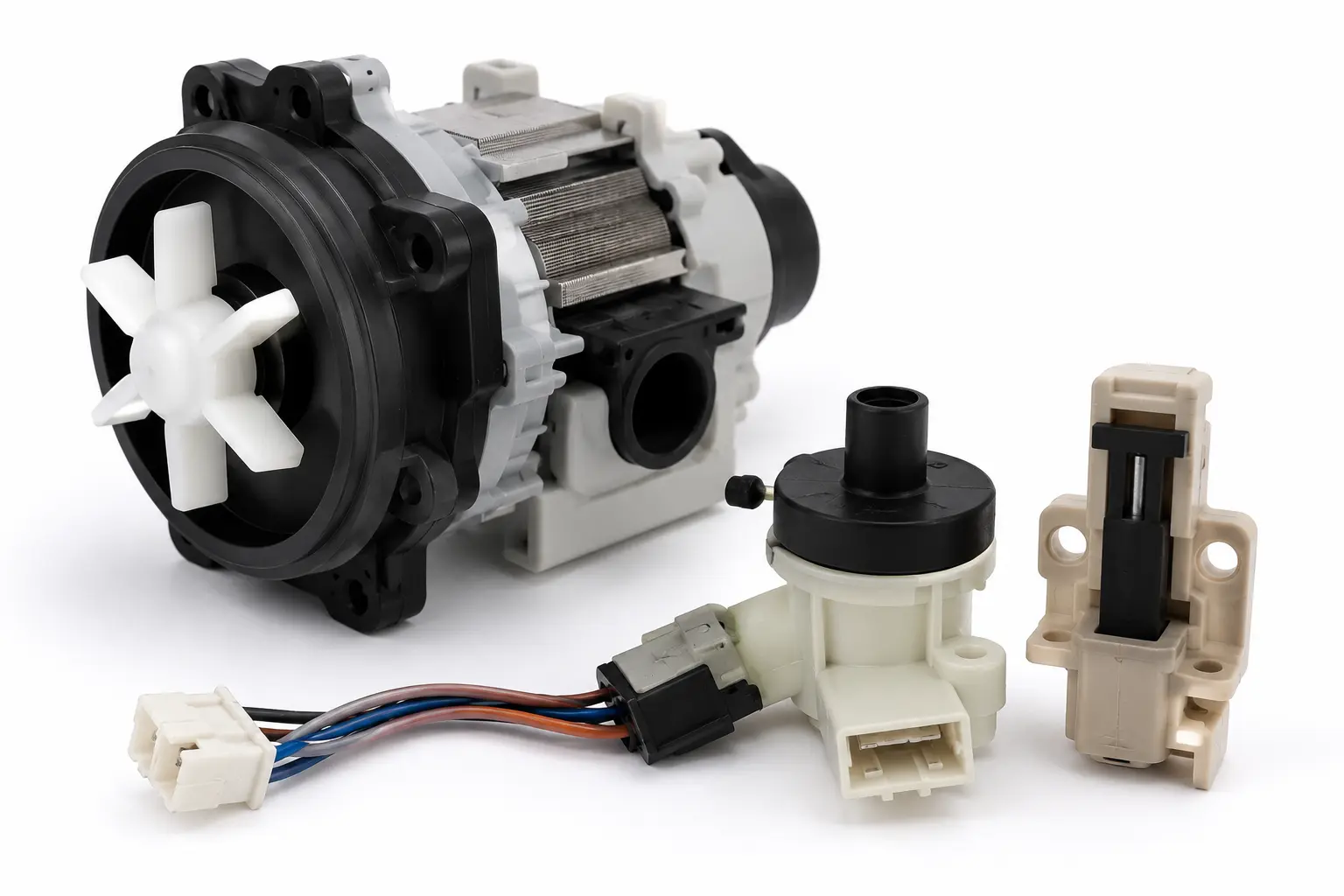
Why KitchenAid Repairs Are Usually Worth It
Most of what fails on a KitchenAid, sensors, pumps, fan motors, heating elements, are individual parts doing their job, and replacing one doesn’t reflect on the health of the rest of the appliance. Because KitchenAid shares core components with Whirlpool’s broader platform, parts are usually easy to source and reasonably priced. Repeated control board faults on the same unit, or a sealed refrigeration system giving out on a much older refrigerator, is where the math genuinely shifts, and we’ll always tell you honestly which side of that line your repair falls on.
KitchenAid Repair Safety, What’s Safe to Check Yourself
A few KitchenAid fault patterns point to something you can safely check on your own. Most, especially anything involving electrical components, gas connections, or refrigerant, need a technician.
Heavy frost buildup blocking the freezer evaporator should be looked at rather than repeatedly manually defrosted and ignored, it can eventually damage the compressor. Any burning or electrical smell from a control board, range, or oven means stop using the appliance and have it inspected before it’s used again.
What’s genuinely safe to check yourself?
On a dishwasher, cleaning the OWI sensor, checking the door latch, and confirming the filter isn’t clogged are all safe. On a refrigerator, vacuuming dust off the condenser coil and confirming vents inside aren’t blocked by food are fine to check before assuming a part has failed. On a range, a single power reset at the breaker is safe and won’t damage anything.
My dishwasher runs the full cycle but dishes come out wet or dirty. What should I check?
Confirm the rinse aid dispenser isn’t empty and that nothing is blocking the spray arms first, since both mimic a ProDry or ProWash sensor failure. If those check out and the problem continues cycle after cycle, it likely points to the fan motor or OWI sensor rather than something you can fix yourself.
Is it safe to reset a KitchenAid appliance repeatedly to clear a code?
A single reset, cutting power at the breaker for about a minute, is safe and clears temporary glitches. If the same code returns right after a reset, that confirms an actual hardware fault, and repeatedly resetting instead of addressing it can let the underlying issue affect other components over time.
KitchenAid Repair Questions, Answered
Specific questions about KitchenAid repair in Sarasota. For general questions about our service, check our main FAQ page.
A 1-1 code means a control board memory failure, the wash program stops partway through and the door unlocks on its own. A single power reset sometimes clears it, but if it returns, the control board itself needs replacing.
Check that rinse aid isn’t empty first, since a low rinse aid level looks identical to a ProDry failure. If rinse aid is full and dishes are still wet, the ProDry fan motor or heating element has likely failed.
A 3-3 code means the optical water indicator, the sensor that reads soil level for the ProWash cycle, failed to calibrate. Cleaning the sensor and resetting the dishwasher resolves many of these without needing a replacement part.
AquaLift uses low heat and water instead of a high-heat burn-off, so it’s genuinely gentler on the oven but struggles with heavier, baked-on spills that a traditional self-clean cycle would remove. That’s usually a feature limitation, not a fault, though a cycle that has never worked since new is worth having checked.
F3 points to an open oven temperature sensor circuit, a straightforward sensor replacement. F5 points to a door latch or switch fault, most common on self-clean models. Never force a locked self-clean door, a technician can reset the latch safely.
FF means the freezer evaporator fan has failed. FC means the condenser fan is restricted, often from a dust-clogged condenser coil. Cleaning the coil annually is the single best way to prevent both.
A dE code means the automatic defrost cycle isn’t running on schedule, usually a failed defrost heater or thermostat. Heavy frost on the rear interior wall of the freezer is the visible warning sign before the evaporator becomes fully blocked.
Most single-part repairs, sensors, fan motors, heating elements, run $150 to $400 including labor. A full control board replacement runs higher, typically $280 to $620. The diagnostic fee is usually waived if you approve the repair.
Almost always, yes, for a single component failure. Because KitchenAid shares core parts with Whirlpool’s platform, replacement components are usually easy to source. It’s only worth a real conversation when control board faults keep recurring or a refrigerator’s sealed system fails on a much older unit.
Cut power at the breaker for about a minute, then restore it. A single reset is safe and clears temporary glitches. If the same code comes right back, that confirms a real hardware fault rather than something a reset can fix.
Not identical, but often built on the same underlying platform. KitchenAid is manufactured by Whirlpool Corporation, and core components like control boards, pumps, and compressors frequently cross-reference across KitchenAid, Whirlpool, and Maytag, which generally helps with part availability and cost.
Most single-part repairs, sensors, fan motors, door latches, are completed the same day once the part is confirmed on the truck. A part that needs to be special-ordered for an older or less common model may take a few extra days.
In most cases, if the appliance was provided with the rental and failed through normal use, repair is the landlord’s responsibility under Florida’s implied warranty of habitability. Damage from tenant misuse is typically the tenant’s responsibility, and a written repair estimate is useful documentation if it’s disputed.
KitchenAid appliances don’t need scheduled annual servicing, but cleaning the refrigerator’s condenser coil yearly, wiping the dishwasher’s OWI sensor, and checking door seals periodically all help prevent the most common failures.
If the display, light, and turntable all still work but the unit won’t heat, the magnetron has very likely failed. This is one of the pricier microwave repairs, so it’s worth a quote before deciding to fix versus replace.
Most KitchenAid major appliances carry a one-year limited warranty on parts and labor from the original purchase date, with longer coverage on some sealed refrigeration and cooktop components. Out-of-warranty repairs are billed at standard diagnostic and part rates.
Get Your KitchenAid Fixed Today
Tell us what it’s doing and we’ll get a technician out fast. No obligation, no pressure, just a straight answer and a fair price.
Fill out the form. One of our reps will reach out to get your inspection scheduled.