
Dryer Repair in Sarasota, FL
Not spinning, not draining, or won’t start? We diagnose the exact issue and give you a straight price before any work begins. Same day appointments available.
100+ ReviewS
Licensed & Certified
100% Satisfied clients
Same Day Appointments
All Major Brands Serviced
Upfront Pricing, No Hidden Fees
Why Dryers Fail Faster in Sarasota
Heat and humidity work against a dryer here more than almost anywhere else. High moisture in the air means clothes hold onto more water going in, so the dryer runs longer and hotter just to get a normal load done, which adds wear to the belt, the motor, and the heating element faster than in a dry climate.
Salt air off the coast also corrodes exterior vent hoods and exhaust dampers faster than inland homes see, so a vent that looks fine from inside can be rusted shut outside. Add in how many homes here sit empty for months at a time between seasons, and a dryer that was fine in April can have a nest of lint sitting untouched since spring by the time it gets used again in November.
Common Dryer Problems in Sarasota Homes
These are the calls we get most often, on both gas and electric dryers. Find what matches what you’re seeing.
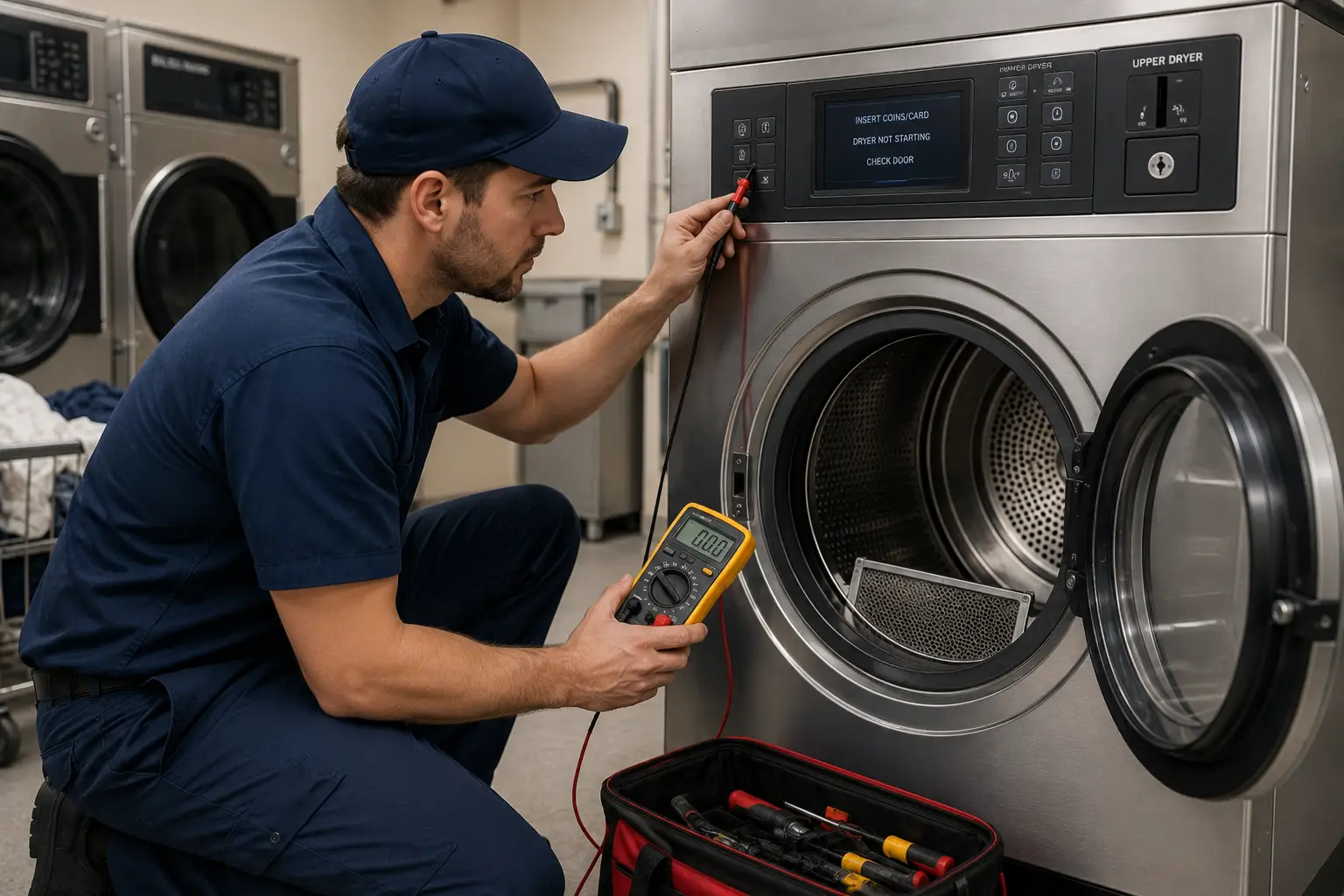
Why won’t my dryer start at all?
Start with the outlet and breaker, a tripped breaker is more common than people expect. If power is confirmed, it’s usually a blown thermal fuse, a door switch that thinks the door is open, or a start switch that has failed. A dryer that worked fine and then went dead overnight usually points to something electrical.
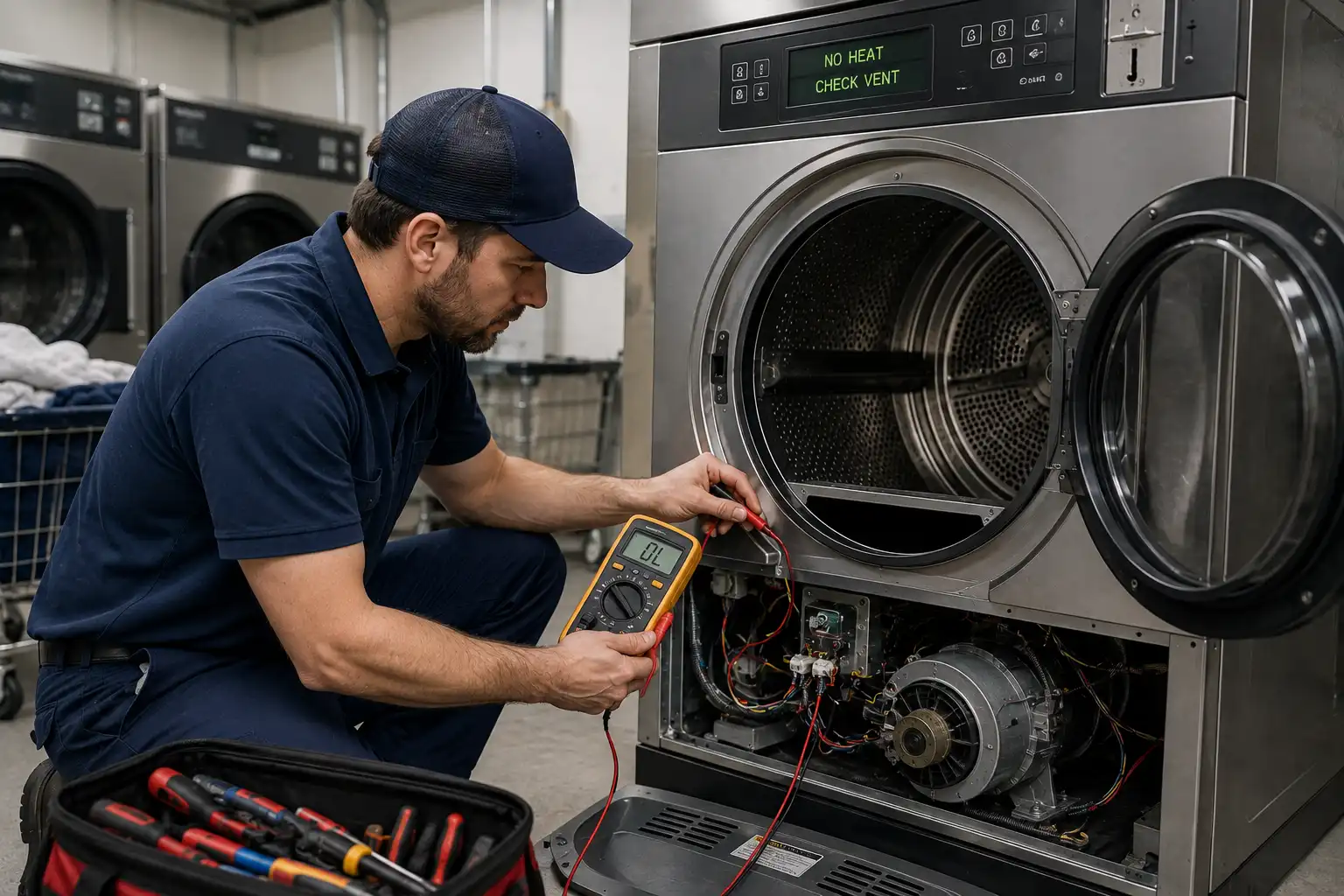
Why does my dryer run but not heat?
A blown thermal fuse is the most common cause, usually triggered by restricted airflow in the vent. A failed heating element on electric dryers or an igniter issue on gas dryers are the next most likely culprits. This is one of the most common dryer calls we get.
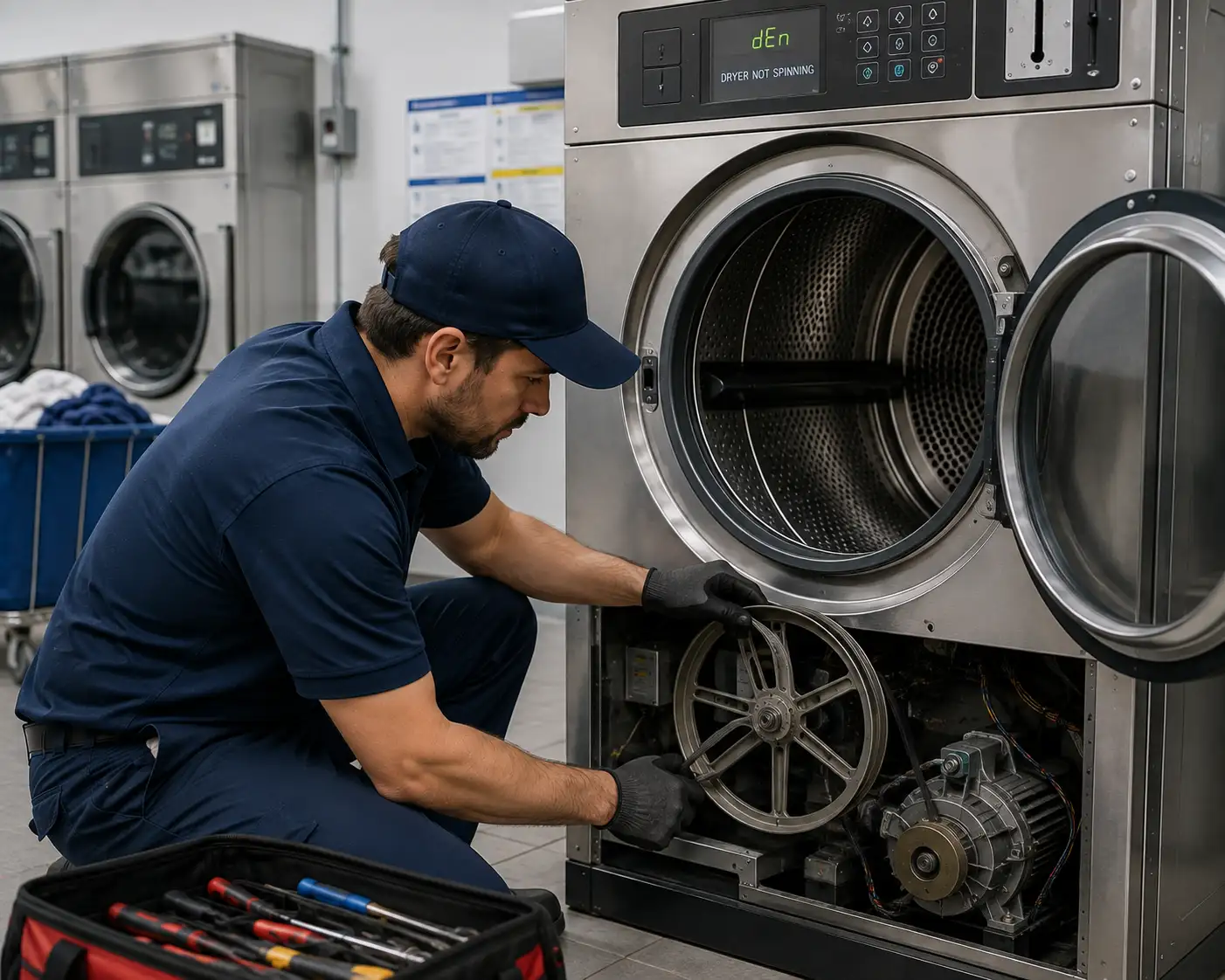
Why won’t my dryer drum spin?
Usually a worn or broken drive belt, a bad idler pulley, or a motor that has failed. If the dryer gets hot and turns on but the drum just sits still, a snapped belt is the most likely answer.
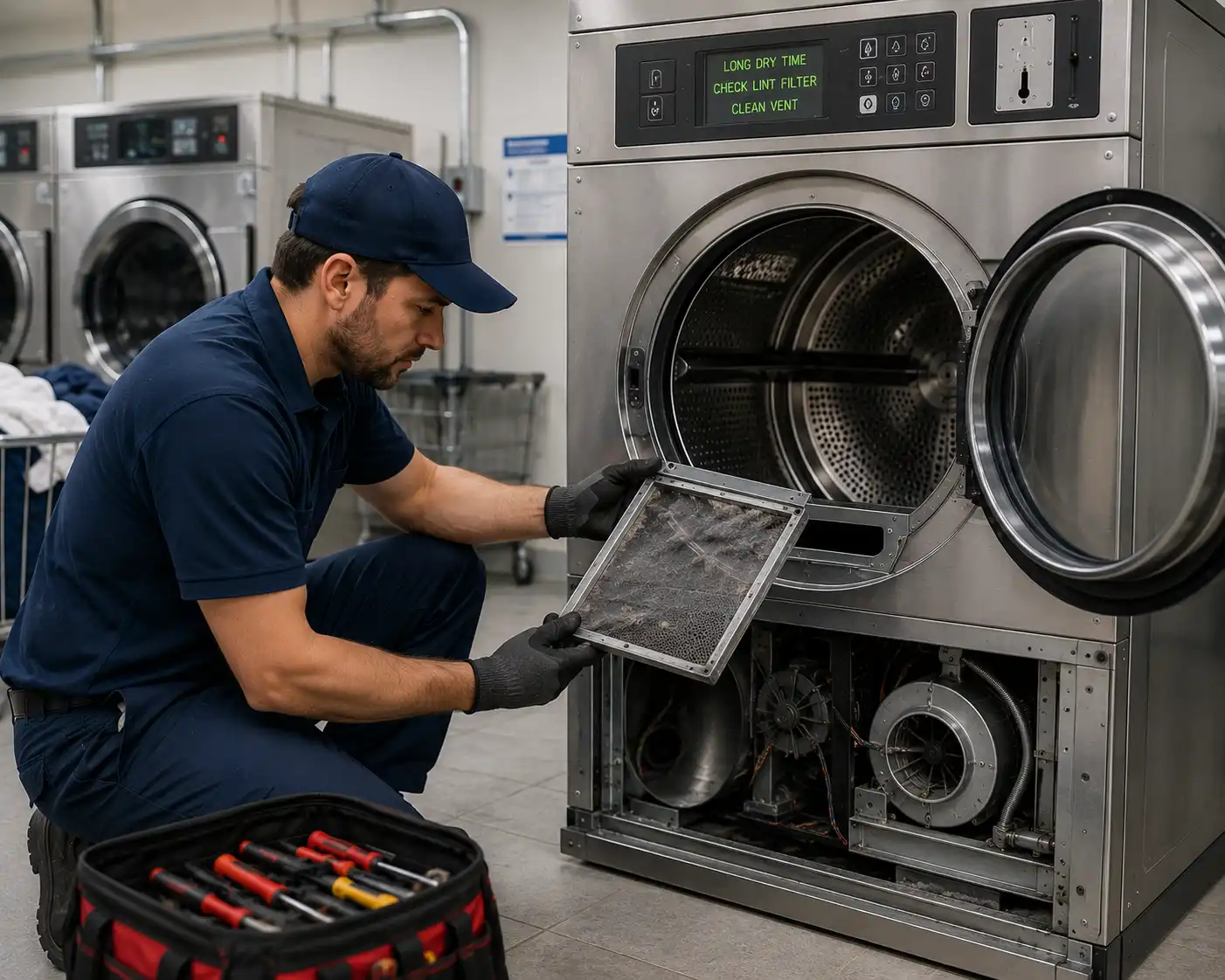
Why does my dryer take multiple cycles to dry a load?
Almost always restricted airflow, a clogged lint screen, a lint packed vent line, or a blower wheel that has slowed down. Overloading the drum can also stretch out drying time, but a sudden change usually means the vent needs attention.
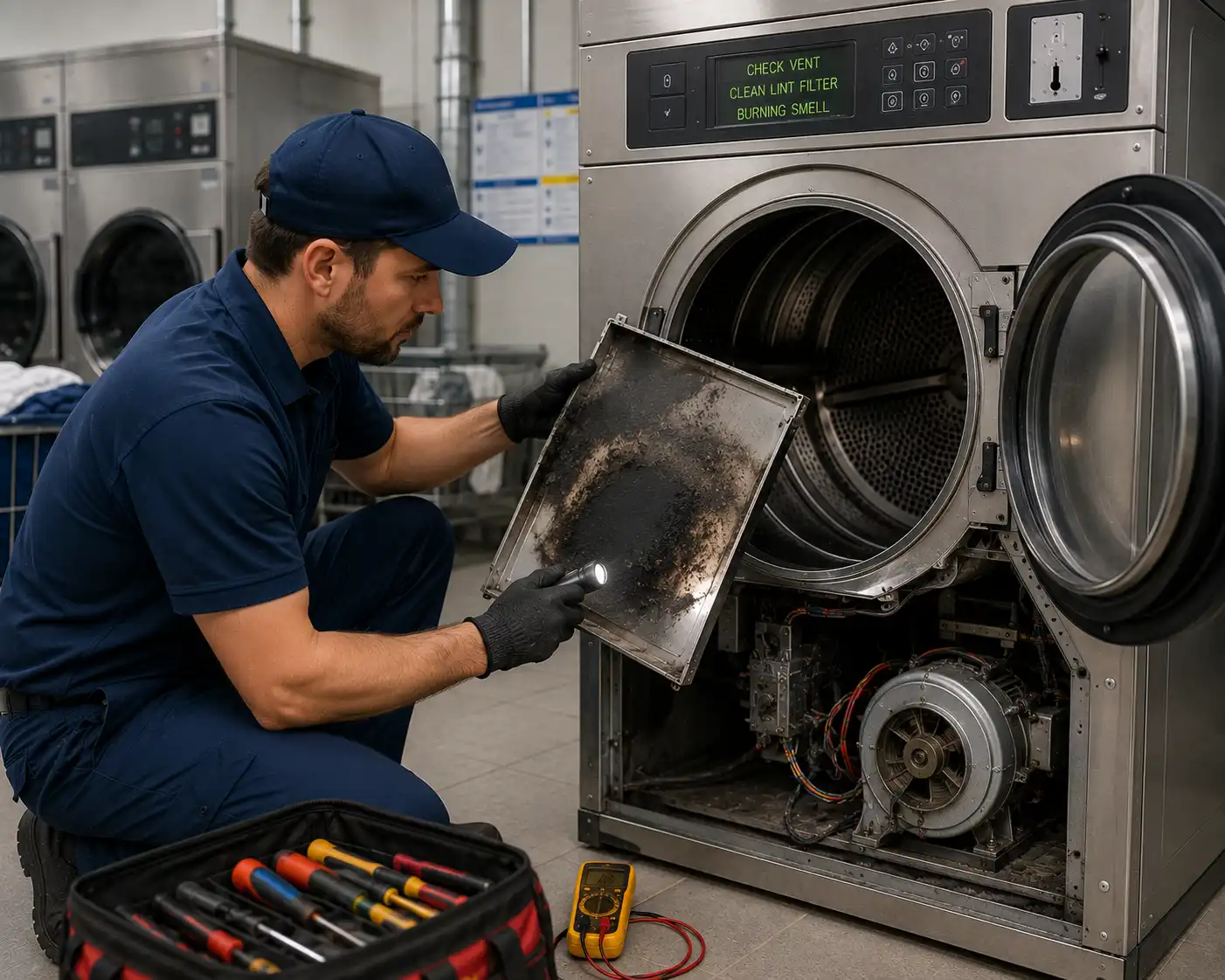
Why does my dryer smell like it’s burning?
Turn it off and unplug it. A burning smell usually means trapped lint overheating near the element, a slipping belt creating friction, or a wiring issue. This is one of the few dryer problems that carries an actual fire risk, so it shouldn’t wait.
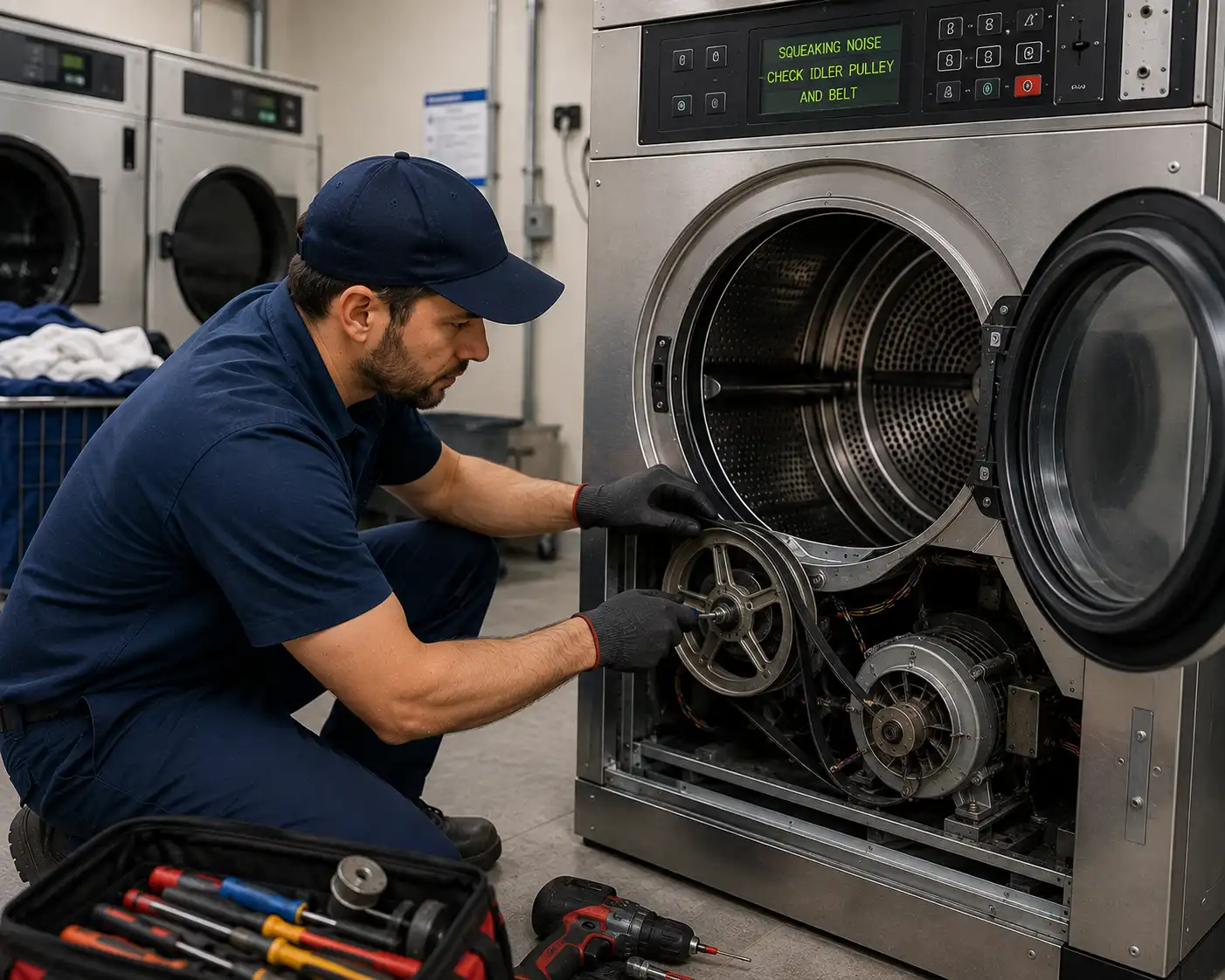
Why is my dryer squeaking or grinding?
A squeal on startup is commonly a worn idler pulley or drive belt. A grinding or scraping sound during the tumble usually means worn drum rollers, a bad drum bearing, or a felt seal that has worn through. The location of the noise usually tells us where to start.
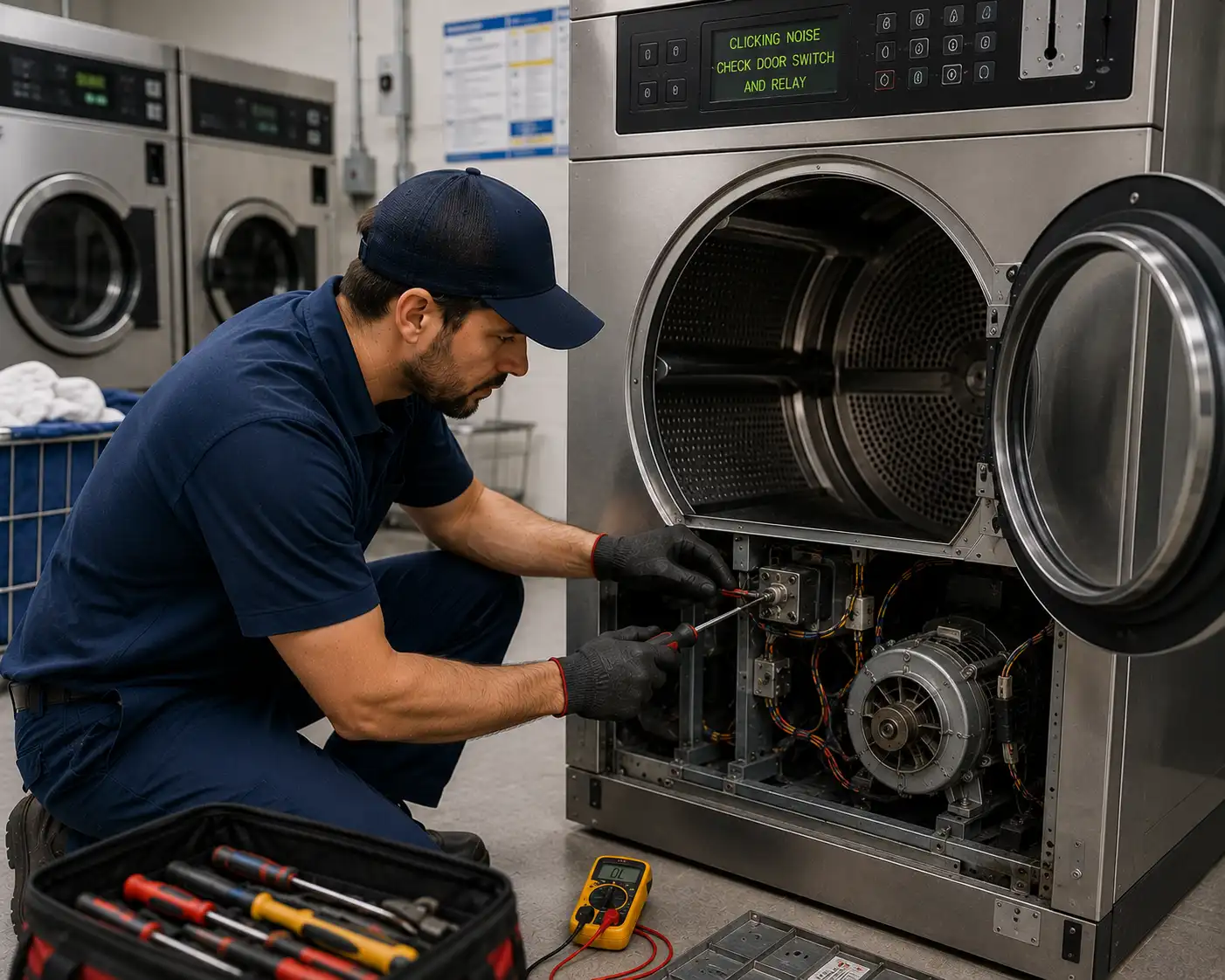
Why does my dryer click or hum but not run?
A clicking sound without the drum turning often points to a bad start relay, a failing timer, or a motor that’s trying to start but can’t. On some models it’s a simple thermal cutoff issue rather than the motor itself.
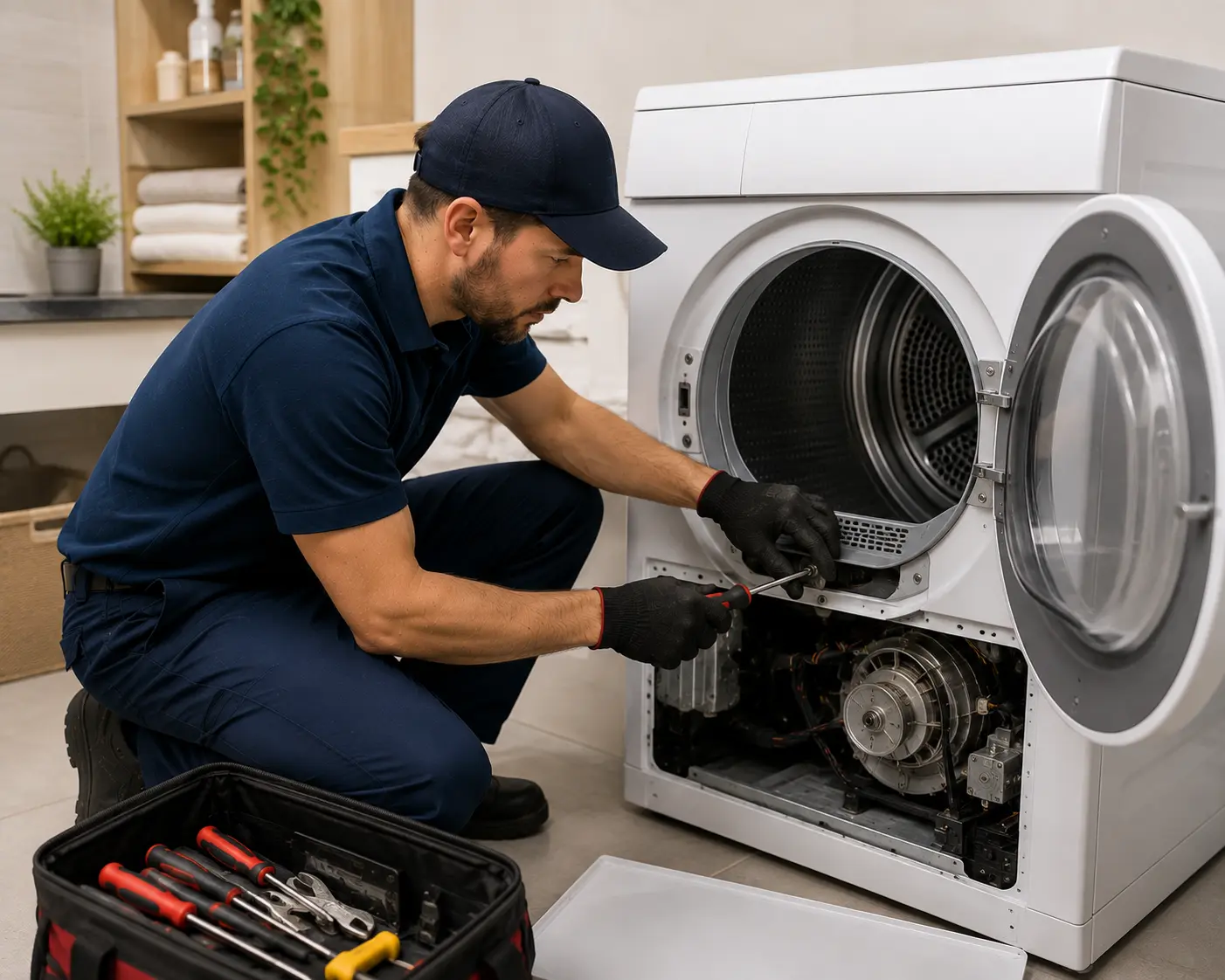
Why does my dryer stop mid cycle or show an error code?
Often a moisture sensor issue, an overheating motor caused by restricted airflow, or a control board losing communication with the rest of the machine. On newer models, the exact error code usually tells us which system to check first.
Warning Signs Your Dryer Needs Attention
Catching these early usually means a smaller repair. With a dryer, waiting can also mean a fire risk.
Clothes coming out hot but still damp
The outside of the dryer feels hot to the touch during a cycle
A burning or hot dust smell during or after a cycle
Squeaking, grinding, or thumping during the tumble
Cycles taking noticeably longer than they used to
Little to no lint in the trap after a full load
The vent hood flap barely moves when the dryer is running
Error codes appearing more often, even if the machine still runs
Most of these point to a single part, a belt, a fuse, a clogged vent, that’s simple to fix if it’s caught early. A hot exterior, a burning smell, or almost no lint collecting in the trap are the three signs worth acting on the same day rather than waiting, since they’re the ones most often tied to restricted airflow and heat buildup.
Gas vs Electric Dryer Issues
Both styles fail in similar ways mechanically, but the heat source changes what we check first.
When a gas dryer runs but doesn’t heat, the igniter is the most common failure point, followed by the flame sensor or the gas valve solenoid. Because these dryers involve a gas line, any repair touching the burner assembly should be handled by a licensed technician rather than attempted as a DIY fix. A gas dryer that clicks repeatedly without lighting is almost always the igniter.
Electric dryers rely on a heating element, and these run on two separate 120 volt circuits, so a tripped breaker on just one side can leave the dryer tumbling with no heat instead of shutting off completely. A failed heating element, a blown thermal fuse, or a bad thermostat are the usual causes when it runs cool.
Which one is more reliable? Gas dryers tend to dry faster and cost less to run over time, but repairs involving the burner assembly need a licensed technician. Electric dryers are simpler to diagnose and safer to troubleshoot yourself up to a point, but they draw more power and can be more expensive to run. Either style lasts about as long with normal maintenance.
Quick Checks Before You Call a Technician
Some dryer problems take two minutes to rule out yourself. Try these first, they solve more calls than you’d expect.
Check the breaker, both sides
Electric dryers run on two separate breakers. One can trip while the other stays on, which looks like a heating problem but is actually just power to the element being cut.
Pull the lint screen and look at it
A thin, matted layer that won’t fully clear even after wiping is a sign lint is bypassing the screen and building up further down the line.
Go outside and check the vent hood while it runs
The flap should swing open with a steady flow of warm air. If it barely moves or nothing comes out, the blockage is somewhere in the duct, not the machine itself.
Make sure the door is latching fully
A door switch that isn’t triggering will stop the dryer from starting or cause it to stop mid cycle. Push firmly and listen for the click.
Try a smaller, single item load
If the drum won’t turn on a full load but spins freely with nothing in it, that points toward a belt or motor issue rather than a jam.
Note any error code exactly as shown
On digital models, the exact code, not just “it showed an error,” tells a technician which system to check first and often saves a whole diagnostic step.
If you’ve checked all of these and the problem is still there, or if you smell anything burning at any point, stop and call rather than keep testing. A burning smell is never worth troubleshooting further on your own.
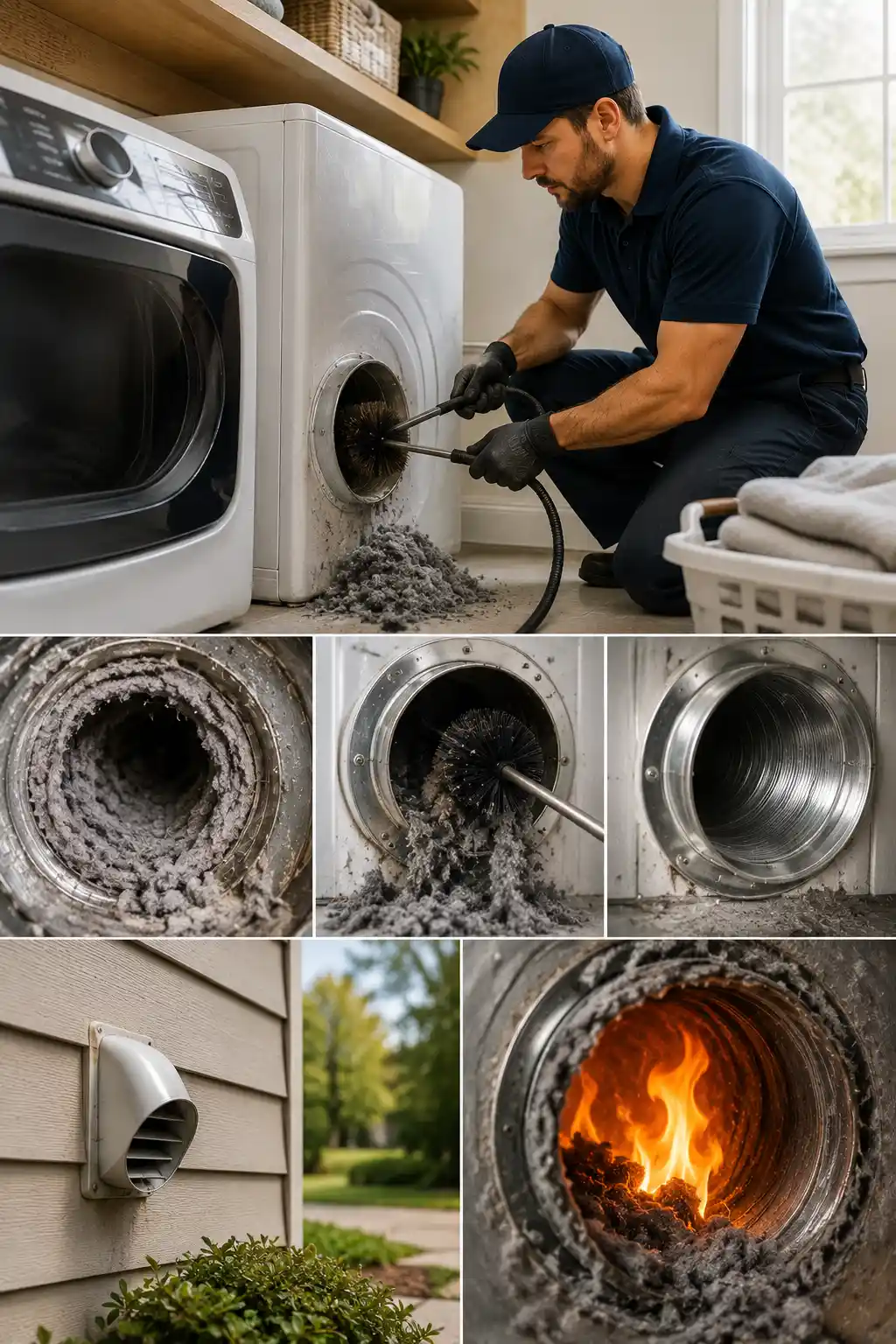
Dryer Vent and Fire Safety
More dryer calls trace back to the vent than to any single part inside the machine. Lint that escapes the trap builds up along the duct walls, and once airflow is restricted, the dryer runs hotter and longer to get the same result. That heat buildup is the leading cause of dryer related house fires. On gas dryers there’s a second risk on top of that, restricted venting can also push exhaust gases back into the house instead of outside, which is a carbon monoxide concern, not just a fire one.
- Clean the lint trap before every single load, not just when it looks full
- Have the full vent line professionally cleaned at least once a year
- Rigid or semi rigid metal duct is required by code, foil or plastic ducting is not
- Vent runs longer than 25 feet need a booster fan or a shorter, more direct path
- Homes with gas dryers should have a working carbon monoxide detector nearby
Coastal salt air corrodes exterior vent hoods and exhaust dampers faster than inland homes see, so a vent that looks fine from inside the laundry room can be rusted stuck outside. If your dryer is taking two or three cycles to finish a load that used to take one, or the outside of the machine feels unusually hot, stop running it and have the full duct run inspected, not just the trap.
Is Your Dryer Beyond Repair?
Age matters, but the type of failure matters more. Here’s the real line between repair and replace.
- Thermal fuse or heating element replacement
- Drive belt or idler pulley replacement
- Door switch, start switch, or timer failure
- Igniter or flame sensor on gas dryers
- Drum rollers, bearing, or felt seals on a machine under 10 years old
- Motor and drum support failing together on an older unit
- Control board failure on a dryer past 10 to 12 years old
- Cracked drum or damaged cabinet frame
- Second major repair within a year on an older unit
- Repair quote approaching half a replacement unit’s cost
Why the Failure Type Matters
A belt, a fuse, a switch, these are individual parts doing their job, and swapping one doesn’t say anything about the rest of the machine. A motor or control board failure on an older unit is different, it usually means the dryer has been under stress for years. Most dryers are built to last 10 to 13 years with normal use, and under that age a single failed part is almost always worth fixing rather than replacing the whole unit.
Long Vent Runs in Condos and High-Rises
Common in Siesta Key, downtown Sarasota, and Longboat Key buildings, where the vent path is longer and harder to access than in a standalone house.
In a typical house, the dryer vent runs a few feet to an exterior wall. In a mid-rise or high-rise unit, that same vent often has to run horizontally through a chase, turn multiple corners, and travel much farther to reach an exterior exhaust point, sometimes shared with other units on the same stack. Every elbow in that path reduces effective airflow, so a run that’s technically under the code maximum on paper can still perform poorly if it has several tight turns.
Slower drying is often the first sign
If a unit has always taken longer to dry a load than a comparable house nearby, that’s usually the vent geometry, not the machine.
Booster fans need periodic checking
Buildings with long runs often rely on an inline booster fan to keep airflow moving. These can fail quietly and go unnoticed until drying performance drops.
Shared exhaust points need coordination
Some buildings vent multiple units into a common shaft. If a neighboring unit’s vent is blocked, it can affect airflow for the whole stack, not just one dryer.
If you live in a condo or high-rise and your dryer has always run long cycles, it may not be a fault with the machine at all. We check the actual vent path length and condition before recommending any repair, since replacing a part won’t fix a duct problem.

Who Is Responsible, Landlord or Tenant?
This comes up just as often for dryers as it does for washers. If a dryer was provided as part of the rental, the landlord is generally responsible for keeping it in working order under Florida law. Some leases try to shift small repairs, often anything under 100 dollars, onto the tenant, but that language doesn’t erase the landlord’s baseline obligation to provide a working appliance.
- Provided appliances are the landlord’s responsibility to maintain
- Lease clauses shifting small repairs to tenants are common but limited
- A written diagnosis protects both sides if there’s a dispute
- We document every repair with the actual cause, not just the fix
If you’re a tenant whose landlord is pushing back on a repair, or a landlord trying to sort out who’s on the hook for a bill, a clear written diagnosis from a licensed technician is usually the fastest way to settle it. We provide one on every call, no extra charge.
Brand Specific Dryer Notes
Every brand has its own quirks. Here’s what we see most often by manufacturer.
Whirlpool
Whirlpool dryers are some of the simplest machines to work on, which keeps repair costs lower on average. A failed motor contact or a worn drive belt are the most common calls, and parts are widely available even on older units.
Samsung
Samsung dryers lean on electronic sensors more than older mechanical models, so a single sensor issue can stop a cycle that would otherwise still run on a simpler machine. Parts availability has improved and most repairs are straightforward once the fault is identified.
LG
LG dryers are generally well built and reliable, but replacement parts can take longer to source than more common brands. Noting the exact error code before you call saves a step, since it usually points us straight to the part.
GE
A clicking sound without the drum turning is one of the more common GE specific complaints, often tracing back to the start switch or a timer issue. GE also uses more proprietary parts on several models, which affects part cost more than labor.
Electric Dryers, All Brands
Electric dryers run on two separate 120 volt circuits, so a repair sometimes involves rewiring from an old 3 prong cord to a 4 prong setup to meet current code. This is an electrical job and worth having a licensed technician handle rather than doing it yourself.
Maytag & Kenmore
Older Maytag and Kenmore dryers were built to last, and parts are still widely available, which makes repair the clear choice in most cases even on a 10 to 13 year old unit, provided the failure is a single component rather than a core mechanical issue.
DIY Repairs, What’s Actually Worth Doing Yourself
Some dryer repairs are genuinely simple. Others involve electricity or gas and are worth leaving to a technician.
- Cleaning the lint trap and accessible vent sections
- Replacing a drive belt on most standard models
- Swapping drum rollers or a worn idler pulley
- Leveling the machine using the adjustable feet
- Heating element or gas igniter replacement
- 3 prong to 4 prong electrical cord conversions
- Any repair involving the gas line or burner assembly
- Motor, control board, or wiring harness issues
Why the difference matters
A belt or a set of rollers is contained and low risk, if something goes wrong you haven’t damaged anything else. A heating element or a gas connection involves live electricity or fuel, and a mistake there can create a genuine safety hazard rather than just an inconvenience. If you’re not sure which category your repair falls into, send us a photo and we’ll tell you honestly whether it’s worth doing yourself.
Dryer Repair Costs in Sarasota
Real ranges, not a vague estimate. Exact pricing is confirmed on site before any work begins.
| Repair Type | Typical Cost Range |
|---|---|
| Diagnostic / Service Call | $99 – $150 (waived if you approve the repair) |
| Drive Belt Replacement | $100 – $200 |
| Thermal Fuse Replacement | $100 – $175 |
| Heating Element Replacement | $150 – $250 |
| Igniter / Flame Sensor Replacement (Gas) | $150 – $275 |
| Door Switch / Start Switch Replacement | $100 – $200 |
| Drum Rollers / Idler Pulley Replacement | $150 – $275 |
| Full Vent Line Cleaning | $125 – $250 |
| Control Board Replacement | $250 – $500 |
| Motor Replacement | $300 – $600 |
Getting Your Dryer Ready After Months Away
If your home sits empty part of the year, run through this before the first load of the season.
Check the lint trap and duct before the first load. Dust and lint settle even when the machine hasn’t run, and pests occasionally nest in vent lines left unused for months.
Inspect the exterior vent hood for corrosion or blockage. Salt air works on an idle vent just as much as one in daily use, sometimes more, since there’s no airflow keeping moisture moving through it.
Run one empty cycle before doing laundry. This surfaces any noise, smell, or heating issue before it’s tangled up with an actual load of clothes.
Check the breaker panel. Power surges during storm season while the home was unoccupied can trip a breaker without anyone there to notice.
Book a vent cleaning before peak season, not during it. Scheduling gets tighter once seasonal residents arrive, and a clean vent going into heavy use holds up far better than one that’s already restricted.
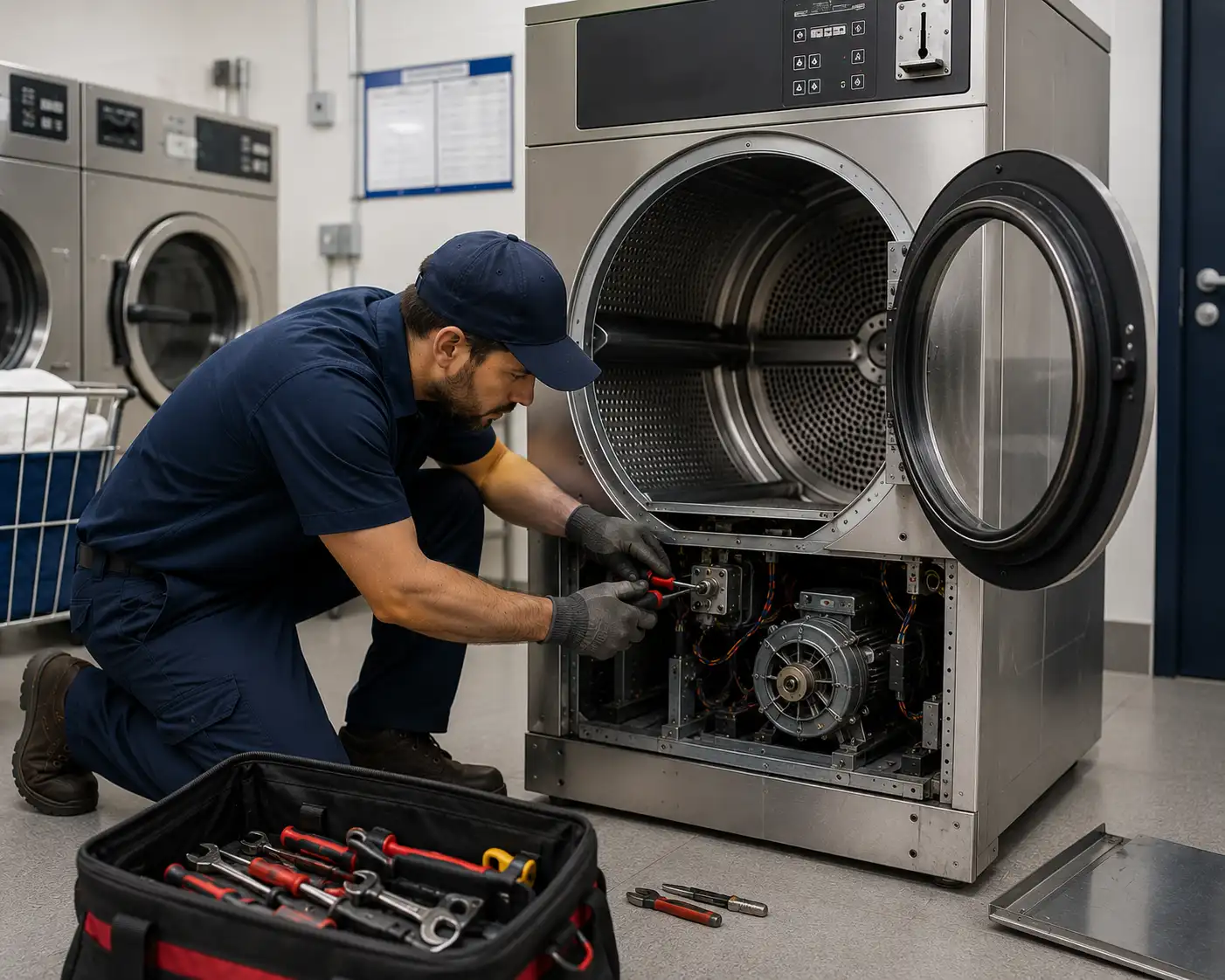
Commercial & Multi Unit Laundry Repair
A dryer down in an apartment complex laundry room or a commercial laundromat means lost income and frustrated residents or customers every hour it sits broken. We work with property managers, laundromats, and small businesses across Sarasota to get commercial units back online quickly, and diagnosed correctly the first time.
- Apartment and condo laundry room machines
- Laundromat and coin operated units
- Property management maintenance contracts
- Vent systems shared across multiple units
Commercial dryers run far more cycles than a home unit, which means vent buildup and worn belts show up faster. If a unit has been fixed more than once and the same problem keeps coming back, that usually means the vent system was never fully checked. We inspect the full airflow path before calling a repair done.
Dryer Repair Questions, Answered
Specific questions about dryer repair in Sarasota. For general questions about our service, check our main FAQ page.
How much does it cost to have someone look at a dryer?
What’s a reasonable rate for a dryer repair technician to come out?
Is it more cost effective to repair or replace a dryer?
Does a home warranty cover dryer repair?
How long should a dryer last before I consider replacing it instead of repairing it?
Can I replace my own dryer belt?
Is a landlord or tenant responsible for dryer repairs in Florida?
How long does a typical dryer repair take?
Can dryer repairs be done same day?
Why does my dryer stop working and show an error code?
Are Samsung or LG dryers less reliable than other brands?
Why won’t my dryer turn on at all?
Is it normal for my dryer to make noise, and what noises should worry me?
What causes a burning smell from my dryer, and is it safe to keep using it?
Why does my dryer take two or three cycles to dry a single load?
How often should I clean my dryer vent to prevent problems?
Can a clogged dryer vent actually cause a fire?
Is a gas dryer more expensive to repair than an electric dryer?
Why does my electric dryer run but stay cool?
Do you repair stackable and apartment size dryers?
Can a blocked dryer vent cause a carbon monoxide problem?
My dryer in a high-rise condo has always dried slowly, is that normal?
What should I check before using a dryer that’s been sitting unused for months?
Can dryer sheets or fabric softener buildup cause problems?
Get Your Dryer Fixed Today
Tell us what it’s doing and we’ll get a technician out fast. No obligation, no pressure, just a straight answer and a fair price.
Fill out the form. One of our reps will reach out to get your inspection scheduled.