Appliance Care Before a Hurricane: Sarasota Homeowner’s Guide
Hurricane season runs from June 1 through November 30 along the Gulf Coast, and for most of that stretch, Sarasota homeowners are watching the same thing everyone else on Florida’s west coast is watching, the National Hurricane Center’s cone of uncertainty. Bottled water and plywood get most of the attention in storm prep conversations, but the appliances sitting in your kitchen and laundry room are just as exposed, and they’re a lot more expensive to replace than a case of water.
A power surge during a storm can silently fry a refrigerator’s control board. Storm surge and interior flooding can ruin a washer, dryer, or dishwasher sitting low to the ground. And if you’re one of the area’s many seasonal residents, an appliance that sits idle through a summer evacuation or a months-long absence often fails the moment it’s turned back on. None of this is complicated to prevent, but it does need to happen before the storm, not after.
This guide walks through exactly what to do with every major appliance in your home, in the order it actually needs to happen, from two weeks out to the moment you restore power.
Why Hurricane Prep Matters More for Appliances Than People Realize
Most storm damage to appliances doesn’t come from wind. It comes from two things: electrical surges during power fluctuations, and water, either storm surge pushing in from outside or flooding from a roof or window failure inside the home.
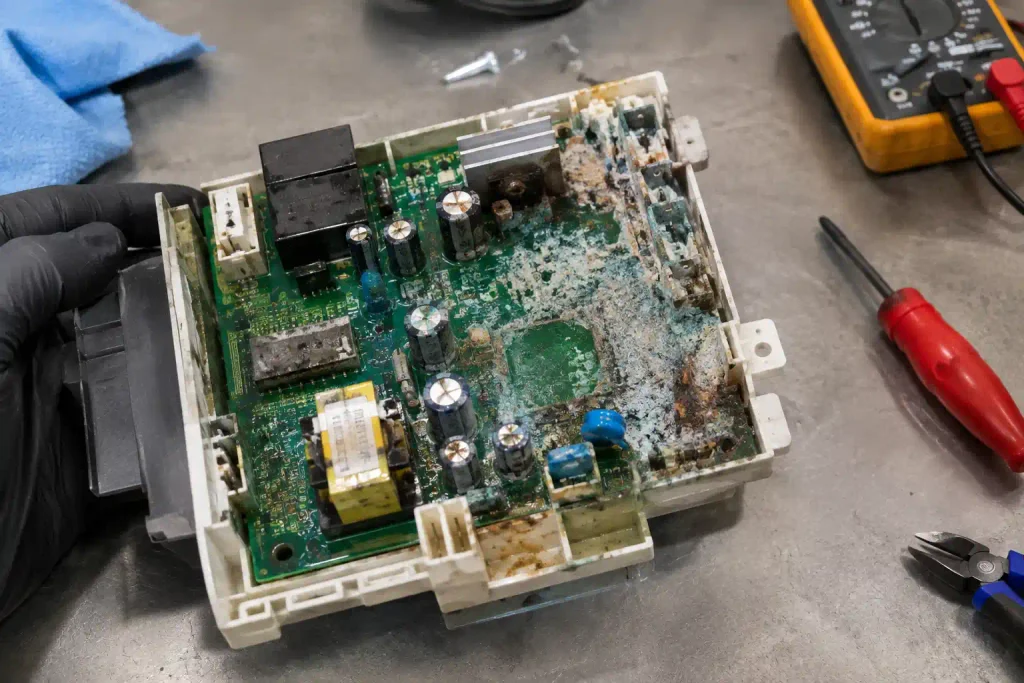
A power surge happens when voltage spikes suddenly, often as the electrical grid is stressed or restored unevenly after an outage. Refrigerators, washers, dryers, and ovens built in the last decade or so all rely on electronic control boards to manage cycles, temperatures, and safety functions, and those boards are the most surge-sensitive component in the entire appliance. A surge that lasts a fraction of a second can take out a control board while leaving the rest of the machine completely undamaged.
Flooding is more straightforward but often worse. Water reaching the compressor, motor, or wiring of an appliance creates a real electrical hazard, and in many cases the unit isn’t safe to use again even if it appears to power on. This matters even for homes outside a mapped flood zone, since interior flooding from a compromised roof or a broken window can affect a kitchen or laundry room regardless of the property’s official flood designation.
Two Weeks Before: Building Your Hurricane Appliance Checklist
The most effective hurricane prep for appliances happens well before a storm is even named, not the night before landfall.
Test Your Surge Protection
If you have a whole-house surge protector installed at your electrical panel, this is the time to confirm it’s still functioning, most have an indicator light that shows if the unit has already absorbed a surge and needs replacing. If you’re relying on point-of-use surge protectors for individual appliances, check that they’re rated for the appliance’s power draw and haven’t already taken a hit from an earlier storm season.
Photograph Your Appliances and Serial Numbers
Take clear photos of your major appliances along with their model and serial number plates, usually located inside the door frame or on the back panel. If a claim becomes necessary after a storm, having this documented ahead of time speeds up the insurance process considerably and gives you a clear baseline of the appliance’s condition before any damage occurred.
Schedule Any Pending Repairs Now
An appliance with an existing issue, a washer that’s already leaking slightly, a refrigerator seal that’s not quite sealing, is far more vulnerable during a storm than one in good working order. A small existing problem combined with a power surge or minor flooding is often what turns a simple repair into a total loss. If something’s already been on your list to fix, hurricane season is the deadline that actually matters.
72 Hours Out: Refrigerator and Freezer Preparation
Once a storm is tracking toward the area, your refrigerator and freezer become the appliances most likely to affect your household directly, since a lost fridge means lost food and a disrupted return to normal life.
Set Temperatures Colder in Advance
Lower your refrigerator and freezer temperature settings a few degrees below normal in the 24 to 48 hours before expected landfall. A colder starting point buys meaningfully more time before food safety becomes a concern if the power goes out.
Freeze Water Bottles and Ice Packs
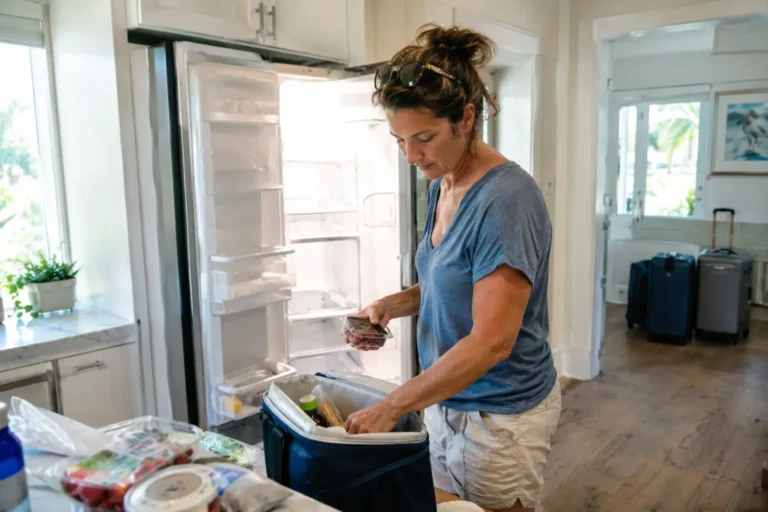
Fill any open freezer space with water bottles or reusable ice packs. A fuller freezer holds cold significantly longer than a partially empty one, and frozen water bottles double as an emergency water supply if needed later.
Know the Four Hour and 48 Hour Rule
According to USDA food safety guidance, a full refrigerator will keep food safely cold for about 4 hours without power, and a full freezer will hold safe temperatures for about 48 hours if left unopened, or roughly 24 hours if it’s only half full. Keep a thermometer inside if you have one, so you can confirm food safety objectively rather than guessing after an extended outage.
Keep the Doors Closed Once Power Is Lost
Every time the door opens during an outage, cold air escapes and that safety window shrinks. Plan meals and supplies around minimizing how often the refrigerator and freezer need to be opened once power is out.
Preparing Your Washer, Dryer, and Dishwasher Before Landfall
Laundry and dishwashing appliances are often overlooked in storm prep, but they’re some of the most common appliances damaged by interior flooding since they typically sit on the ground floor.
Shut Off Water Supply Lines
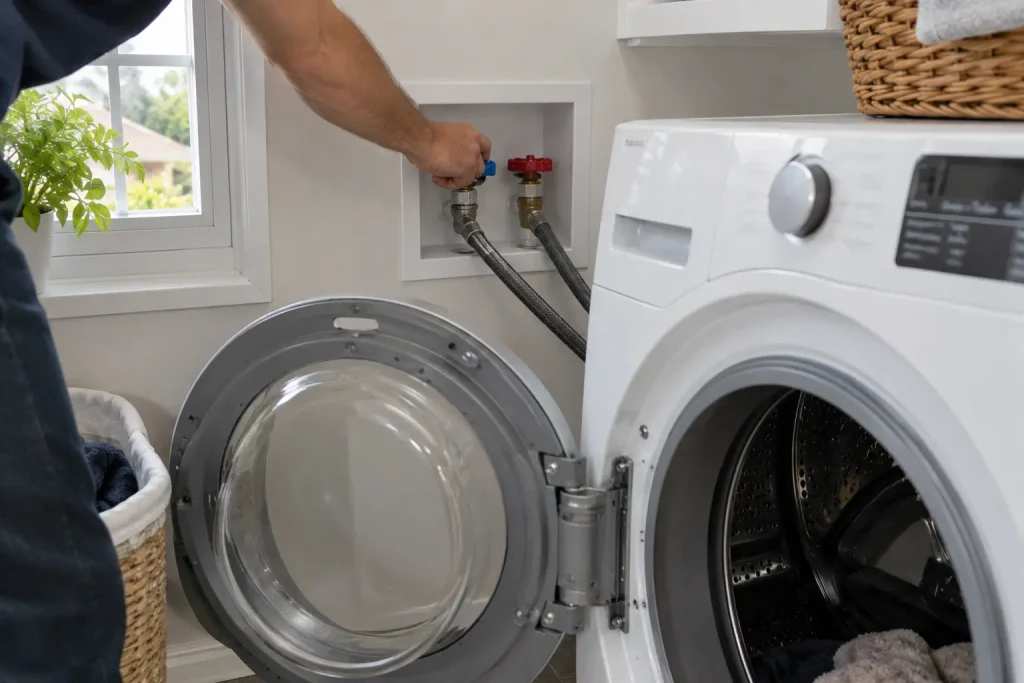
Turn off the water supply valves behind your washer and to your dishwasher before a storm. A supply line failure combined with a power outage, when you’re not home to notice standing water, is a common and entirely avoidable cause of major water damage.
Empty and Prop Doors on Front Load Washers
Empty the washer completely and leave the door propped open. This isn’t primarily a storm safety measure, it prevents mold and mildew from developing in the door seal during the humid, often power-disrupted days that follow a hurricane.
Unplug Rather Than Just Power Off
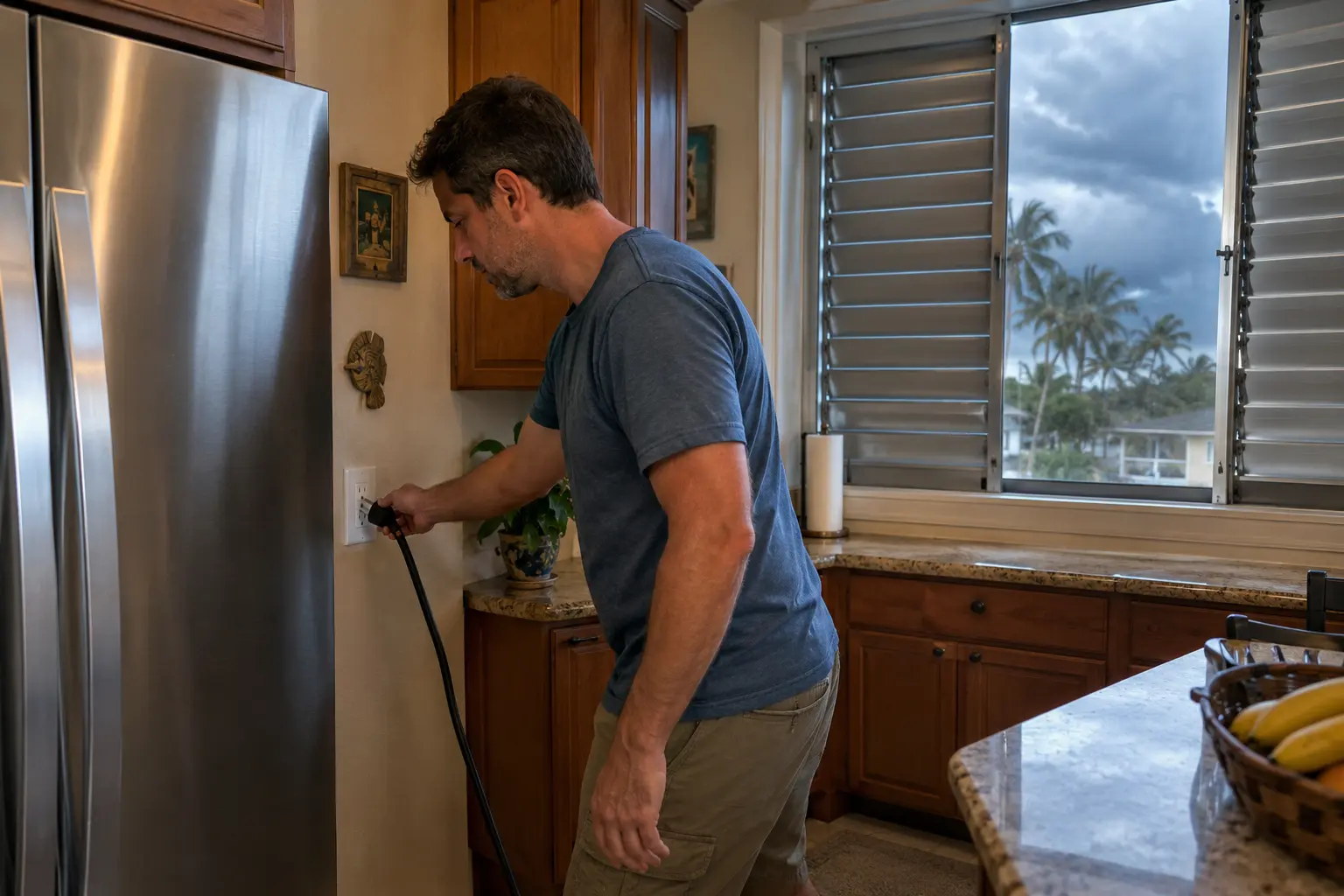
Powering an appliance off at its control panel doesn’t fully disconnect it from the electrical system. Unplugging washers, dryers, and dishwashers directly from the outlet removes them from surge exposure entirely rather than relying on the appliance’s own internal protection.
Elevate Appliances If You’re in a Flood Zone
If you’re in a known flood-prone area or storm surge zone and have advance notice, placing washers and dryers on blocks or platforms, even a few inches, can be the difference between a appliance that survives minor flooding and one that doesn’t. This is far more practical for standalone units than built-in appliances.
Oven, Range, and Cooktop Safety Before a Storm
Gas Appliances and Shutoff Valves
If you have a gas range, oven, or cooktop, know the location of your gas shutoff valve before a storm arrives. In the event of structural damage or a suspected gas leak after the storm passes, being able to shut off gas supply quickly is a genuine safety issue, not just an appliance protection measure.
Electric Range Considerations
Electric ranges and cooktops should be unplugged if they’re on a standard outlet, and the corresponding breaker should be noted so it can be checked before power is restored, particularly if the unit is hardwired rather than plugged in.
Whole Home Surge Protection vs Point of Use Protectors
There are two levels of surge protection worth understanding, and most homes benefit from having both.
A whole-house surge protector installs at your main electrical panel and protects everything in the home from large surges, the kind typically caused by lightning strikes or grid-level fluctuations during storm restoration. These are rated in joules, a higher joule rating means the device can absorb a larger surge before needing replacement, and most units include an indicator showing when they’ve been triggered and need attention.
Point-of-use surge protectors, the kind you plug an individual appliance into, handle smaller, more frequent fluctuations and add a second layer of protection specifically for that appliance. They’re a reasonable addition for a refrigerator or a home office setup, but they’re not a substitute for whole-house protection during an actual hurricane, since a major surge can exceed what a point-of-use device is rated to absorb.
Should You Unplug Everything or Just Rely on Surge Protection?
If you’re home and have the time, unplugging major appliances is always the more reliable option. Surge protectors, even good ones, have a threshold, and an unusually severe surge can exceed it. Unplugging removes the appliance from the circuit entirely, which is the only guaranteed way to prevent surge damage.
If you’re evacuating with limited time, prioritize unplugging refrigerators, freezers, washers, dryers, dishwashers, and any appliance with a digital control board or display. Simpler appliances without electronic controls, like a basic gas range without an ignition module, carry less surge risk and are a lower priority if time is short.
If You’re Evacuating: The Extended Appliance Shutdown Checklist
Anyone in a designated evacuation zone, including every address on barrier islands like Longboat Key and Siesta Key, which fall under Level A evacuation status, needs a more complete shutdown process than someone riding out the storm at home. The same applies to seasonal homeowners leaving the area for an extended period before a storm.
- Unplug every major appliance, not just the sensitive ones
- Shut off water supply to the washer, ice maker, and dishwasher
- Empty the refrigerator and freezer if the absence will extend well past the storm itself, or leave it running with the water line shut off if it will be brief
- Leave washer and dishwasher doors propped open
- Turn off gas supply to the range if you’ll be away for an extended period
- Unplug small kitchen appliances, microwaves, coffee makers, and countertop units
Generator Safety and Appliance Backup Power
Portable generators keep essential appliances running during extended outages, but improper use creates real safety hazards, both from carbon monoxide and from damage to your home’s electrical system.
Never Backfeed Through an Outlet
Plugging a generator into a regular wall outlet to power your home’s circuits, known as backfeeding, is dangerous and illegal in most jurisdictions. It can send electricity back through the grid and seriously injure utility workers restoring power in your neighborhood, in addition to risking damage to your generator and home wiring.
Transfer Switches vs Portable Generators
A properly installed transfer switch allows a generator to safely power selected circuits in your home without the backfeeding risk. Without one, generators should only power appliances plugged directly into the generator itself using appropriate outdoor-rated extension cords.
What Not to Run Off a Small Generator
Refrigerators and window air conditioning units draw a large surge of power when their compressor starts, often two to three times their running wattage. A generator sized only for the appliance’s running wattage can fail or shut down at that startup moment. Check your generator’s starting wattage capacity, not just its continuous rating, before assuming it can handle a compressor-based appliance.
After the Storm: Restoring Power Safely
Check for Flood Damage Before Plugging Anything In
Before reconnecting any appliance, visually inspect it for water damage. If water reached the compressor, motor, wiring, or control board, the appliance is not safe to use until it’s been professionally inspected, even if it appears to power on normally. Water-damaged electrical components can fail unpredictably or create a shock hazard well after the visible water has dried.
Reset “Sabbath Mode” and Diagnostic Lockouts
Some refrigerators enter a diagnostic or lockout mode, sometimes called sabbath mode, after a significant power fluctuation, and simply won’t respond to normal controls until manually reset. Check your appliance’s manual for the specific reset procedure before assuming a surge has caused actual damage, this is one of the most common false alarms after a storm.
Signs Your Appliance Was Surge Damaged
A refrigerator that powers on but never actually cools, a washer or dryer whose display lights up but won’t start a cycle, or any appliance showing an unfamiliar error code immediately after power restoration are all signs worth having checked rather than assumed fine. Control board damage isn’t always immediately obvious, sometimes an appliance runs in a degraded state for weeks before fully failing.
When to Call a Technician vs DIY Reset
A basic power cycle, unplugging the appliance for 60 seconds and plugging it back in, is safe to try on almost anything and resolves a fair number of post-storm issues on its own. If that doesn’t resolve it, or if the appliance shows any sign of having been in contact with water, that’s the point to call a technician rather than keep testing it yourself.
Flood Damaged Appliances: What’s Salvageable and What Isn’t
Whether a flood-affected appliance can be saved depends heavily on how high the water reached relative to the appliance’s electrical components.
Water that only reached the very bottom of a unit, without touching the compressor, motor, or any wiring, sometimes allows the appliance to be cleaned, dried thoroughly, and safely returned to service after inspection. Water that reached the compressor, control board, or internal wiring generally means replacement is the safer and more practical choice, since these components can corrode internally in ways that aren’t visible from the outside and may not fail immediately, but will fail eventually and unpredictably.
If you’re filing an insurance claim, document the water line height on the appliance with photos before cleaning anything, and keep the appliance in place if possible until an adjuster has had a chance to see it. Flood damage is typically covered separately from standard homeowners insurance, through the National Flood Insurance Program or a separate flood policy, so confirming what your specific coverage includes before a storm arrives is worth doing well ahead of hurricane season.
Hurricane Appliance Prep Checklist
Two weeks out
- Test whole-house surge protector
- Photograph appliances and record serial numbers
- Schedule any pending appliance repairs
72 hours out
- Lower refrigerator and freezer temperatures
- Fill empty freezer space with water bottles or ice packs
- Confirm gas shutoff valve location
Day before / day of
- Unplug refrigerator, freezer, washer, dryer, dishwasher, and range if not evacuating for long
- Shut off water supply to washer and dishwasher
- Prop open washer and dishwasher doors
- Elevate standalone units if in a flood-prone area
If evacuating
- Unplug every major and small appliance
- Shut off gas supply for extended absences
- Empty or properly prepare the refrigerator depending on length of absence
After the storm
- Inspect for flood damage before reconnecting anything
- Check for sabbath mode or diagnostic lockouts before assuming damage
- Power cycle appliances showing no response
- Call a technician for anything that was in contact with water or shows an unfamiliar error code
Frequently Asked Questions
How long will my refrigerator stay cold during a power outage? A full refrigerator holds a safe temperature for about 4 hours if the door stays closed. A full freezer holds safe temperatures for about 48 hours unopened, or roughly 24 hours if it’s only half full, according to USDA food safety guidelines.
Should I unplug my refrigerator before a hurricane? If you’re evacuating or expect an extended outage, yes. If you’re staying home and have a whole-house surge protector, leaving it running with the temperature set colder in advance is reasonable, but unplugging remains the more reliable protection against a severe surge.
Can a power surge really damage a refrigerator or washer? Yes. Modern appliances rely on electronic control boards that are highly sensitive to voltage spikes. A surge lasting a fraction of a second can damage the control board while leaving the rest of the appliance mechanically intact, which is why an appliance can look undamaged but simply not turn on or function correctly afterward.
Is it safe to use an appliance that got wet during a storm? Not until it’s been inspected. Water reaching the compressor, motor, or internal wiring creates an electrical hazard even if the appliance appears to power on normally. This applies even to appliances outside a mapped flood zone, since interior flooding from roof or window damage carries the same risk.
What is sabbath mode, and why does my refrigerator seem stuck after the power comes back on? Sabbath mode is a diagnostic or lockout mode some refrigerators enter after a significant power event, and it prevents the unit from responding to normal controls until it’s manually reset. This is a common and harmless cause of a refrigerator seeming unresponsive right after a storm, and checking your model’s manual for the reset procedure often resolves it without any repair needed.
Can I run a generator to power my refrigerator during an outage? Yes, but check the generator’s starting wattage, not just its running wattage. A refrigerator’s compressor draws a large power surge when it starts up, often two to three times its normal running wattage, and a generator sized only for continuous load can fail at that moment.
Why shouldn’t I plug a generator into a wall outlet? This is called backfeeding, and it’s dangerous and illegal in most areas. It can send electricity back through the utility grid and seriously injure line workers restoring power nearby, in addition to risking damage to your own home’s wiring and the generator itself. A properly installed transfer switch is the safe way to connect a generator to your home’s circuits.
Does homeowners insurance cover flood damaged appliances? Usually not automatically. Flood damage is typically covered under a separate flood insurance policy, often through the National Flood Insurance Program, rather than standard homeowners coverage. It’s worth confirming exactly what your policy covers before hurricane season rather than after a storm.
What should snowbirds and seasonal homeowners do before leaving Florida for the season? Follow the same shutdown steps as an extended evacuation: unplug major and small appliances, shut off water supply to the washer, ice maker, and dishwasher, leave washer and dishwasher doors open to prevent mold, and consider shutting off gas supply for a long absence. An appliance left completely undisturbed for months often develops a slow leak, a dried out seal, or a compressor that struggles to restart, none of which show up until the appliance is turned back on.
If Your Appliances Didn’t Make It Through the Storm
Even with careful prep, some appliances won’t survive a direct hit from surge damage or flooding, and that’s a normal outcome of a serious storm, not a sign you did something wrong. If you’re dealing with an appliance that won’t respond after power is restored, is showing an unfamiliar error code, or was in contact with any standing water, we inspect storm-related appliance damage across Sarasota and the surrounding barrier islands and neighborhoods, and we’ll tell you plainly whether it’s a simple reset, a repair, or genuinely time to replace it.